Our Clinical Approach
Many men live for years with a foreskin problem — pain, difficulty with intercourse, recurrent infections — before seeking help, often out of embarrassment or fear of “the operation”.
The first question is always: is this phimosis pathological or physiological? In adults, any phimosis causing symptoms warrants assessment. The second question: is there lichen sclerosus? — a white, firm patch on the foreskin or glans that suggests BXO. When BXO is present, topical creams alone are usually not enough.
The goal is never to persuade a patient for or against circumcision — it is to assess the situation together and decide on the option that best serves that individual patient.
What Is Circumcision
Circumcision is the surgical removal of the foreskin (prepuce) — the skin fold that covers the glans of the penis. After the procedure, the glans remains permanently exposed. The extent of tissue removed depends on the underlying pathology, anatomy, surgical technique, and the desired functional result — not on cosmetic guarantees.
Complete circumcision
Removal of the entire foreskin. The most common technique in adults, and generally the only option in lichen sclerosus or extensive scarring.
Limited/partial circumcision & preputioplasty
A more limited excision, or preputioplasty (widening the foreskin opening without full removal), may preserve more tissue in selected cases. However, this may carry a different recurrence profile, particularly with severe scarring, pathological phimosis, or lichen sclerosus — it is not universally superior aesthetically or functionally, and suitability is assessed clinically.
Important: Circumcision does not affect the ability to urinate, fertility, or the basic mechanism of sexual function.
Indications for Surgery
In adults, circumcision is indicated for medical — not purely cultural — reasons. Main indications include:
Pathological phimosis
Inability to retract the foreskin causing symptoms — pain on urination or intercourse, recurrent infections. This is the most common adult indication.
Lichen sclerosus / BXO
A chronic skin condition causing fibrosis and narrowing of the foreskin or glans. Topical corticosteroids alone are usually insufficient — circumcision is often the effective treatment.
Recurrent balanitis / balanoposthitis
Repeated infections of the glans or foreskin despite adequate medical treatment.
Paraphimosis (recurrence prevention)
After successful manual reduction of paraphimosis, circumcision can help prevent further episodes. See the paraphimosis page for urgent management.
Selected premalignant lesions
Penile intraepithelial neoplasia (PeIN) or other premalignant lesions of the foreskin not adequately treated with topical methods.
Physiological non-retractability of the foreskin in young children is not an indication for circumcision. In children, the foreskin naturally becomes retractable with age; assessment should always be made by a specialist paediatric urologist or urologist. This page focuses on adult circumcision.
The Decision Pathway
Not every case of phimosis or inflammation leads to the same treatment. The overview below is educational, not a self-diagnosis tool:
Mild, non-scarred phimosis
Conservative treatment (topical corticosteroids) may be considered
Isolated short frenulum
Frenuloplasty may be sufficient, without circumcision
Scarred phimosis / lichen sclerosus / recurrent inflammation
Circumcision is usually considered as the more definitive option
I Only Have a Short Frenulum — Do I Need Circumcision?
Pain or tearing on the underside of the glans, especially during erection or intercourse, does not always mean phimosis. It may be due to frenulum breve — a short or inelastic band of tissue on the underside of the foreskin, a separate problem from phimosis.
In selected cases of an isolated short frenulum, without generalised scarring of the foreskin, frenuloplasty (division/lengthening of the frenulum) alone may be sufficient, without removing the entire foreskin.
| Circumcision | Frenuloplasty | |
|---|---|---|
| Problem | Foreskin / phimosis / scarring | Short frenulum |
| What is corrected | Foreskin | Frenulum |
| Foreskin removal | Yes | Not usually |
| Suitable for every phimosis | Not always | No |
| Decision based on | Foreskin anatomy/pathology | Frenulum anatomy |
Neither option is universally superior — the choice depends on the real underlying anatomy and cause, as determined by clinical examination.
Lichen Sclerosus (BXO) and Circumcision
Lichen sclerosus (balanitis xerotica obliterans, BXO) is a chronic inflammatory skin condition that can cause whitening, scarring, progressive phimosis, and fissures of the foreskin and glans. In selected cases it can also involve the urethral meatus.
When the foreskin is involved, circumcision is an important treatment option, as topical corticosteroids alone are usually not sufficient.
Important: Circumcision does not guarantee that every form of lichen sclerosus has been fully treated, especially with meatal/urethral involvement. Regular follow-up after surgery is required.
Balanitis, Balanoposthitis and Diabetes
Recurrent balanitis or balanoposthitis can, over time, lead to scarring, pain and secondary phimosis. Circumcision is considered when episodes are recurrent or persistent and conservative treatment (topical hygiene, antifungal or antibiotic therapy depending on the cause) is insufficient.
In some men, recurrent balanitis or phimosis can be associated with diabetes mellitus or glycosuria, which impairs infection control. In unexplained recurrent balanitis, appropriate metabolic evaluation may be needed — this does not mean every case of phimosis is caused by diabetes.
Circumcision and Paraphimosis
Paraphimosis is entrapment of the retracted foreskin behind the glans, with inability to return it to its normal position. This can cause swelling, pain, and impaired circulation of the glans.
Paraphimosis may require urgent treatment. It should not be treated as a mild, non-urgent problem.
After the acute episode is managed, definitive circumcision can be considered at an appropriate later time to prevent recurrence. Elective circumcision is never a substitute for urgent treatment of an acute paraphimosis episode.
Is Circumcision Always Needed?
No. Depending on the cause, options may include:
- Topical corticosteroid treatment in selected cases of non-scarred phimosis
- Gentle stretching where appropriate — never forceful retraction of the foreskin
- Frenuloplasty, for an isolated short frenulum
- Preputioplasty, in selected cases where foreskin preservation is desired
- Treatment of the underlying balanitis/skin condition before surgery is considered
Forceful retraction of the foreskin is not recommended and can worsen the problem. Topical corticosteroids are not appropriate for every scarred adult phimosis — suitability is judged clinically.
Types & Techniques
There is no single circumcision technique. The choice depends on the patient’s anatomy, the indication, and the surgeon’s experience.
Sleeve technique
The most widely used technique in adults. A cylindrical band of foreskin is removed with separate incisions in the outer and inner layers, giving a balanced cosmetic result.
Dorsal slit
An emergency procedure to release a tight foreskin. It is not usually a definitive solution — it is typically followed by full circumcision at a later stage.
Preputioplasty
Widens the foreskin opening without removing tissue. Suitable for mild strictures without lichen sclerosus. Lower rate of definitive resolution compared with full circumcision.
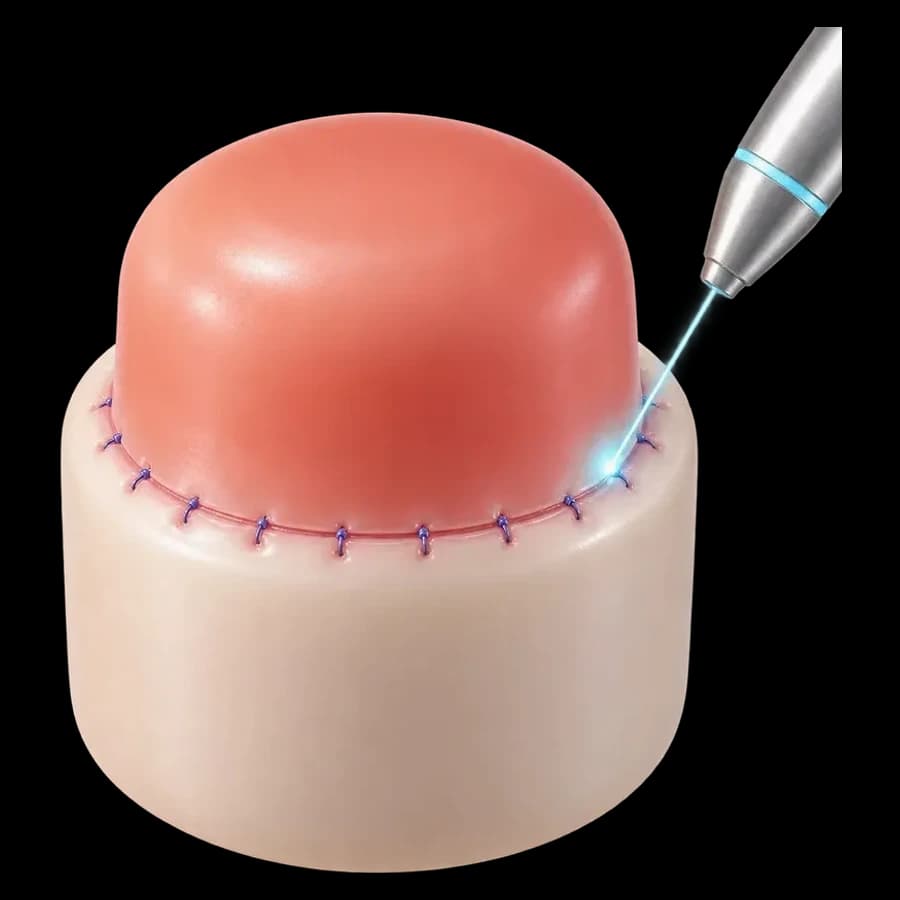
The use of a laser for circumcision does not fundamentally change the surgical technique — it simply replaces the surgical scalpel with a different cutting energy source. What matters for the outcome is correct removal of the pathological foreskin, adequate haemostasis, and proper wound closure — not the specific energy device used. There is no established evidence that a particular device provides less pain, faster healing, or a better cosmetic result.
Preoperative Assessment
Preparation for circumcision is straightforward. The first visit includes clinical examination of the genital area, assessment of anatomy, and discussion of the options.
Clinical examination
Assessment of the degree of phimosis, presence of lichen sclerosus or other lesions, the frenulum, glans and meatus where possible, and signs of infection/inflammation.
Basic blood tests
Full blood count and clotting, as appropriate. Additional tests depend on age, comorbidities, anaesthesia and local protocol — not every patient needs an extensive work-up.
Biopsy (if required)
In suspected lichen sclerosus or a premalignant lesion, a foreskin biopsy may be taken before or at the time of surgery for histopathological confirmation, where locally appropriate.
Anticoagulants/antiplatelets
Patients must never stop anticoagulant or antiplatelet medication on their own. Management is individualised, based on bleeding risk, thrombotic risk, and the indication for the medication, together with the relevant medical team.
Active infection
If there is significant acute inflammation or infection, the timing of elective surgery may need adjustment, as judged by the treating surgeon.
The Procedure Step by Step
This is a general overview, not an operative manual.
Anaesthesia & Duration
Local anaesthesia (most common)
A penile block numbs the area completely. The patient stays awake but comfortable; light sedation can be added for additional comfort.
General anaesthesia
Used in children or in adults who prefer not to be awake during the procedure, in selected circumstances. Requires an anaesthetist.
Duration
Around 30–45 minutes on average, varying with anatomy, technique, and any associated procedures.
Hospital stay
Day-case procedure. Most patients go home within a few hours. Overnight admission is only needed in rare circumstances.
Recovery
Recovery after circumcision is relatively quick. Absorbable sutures gradually dissolve and do not need to be removed.
Moderate pain and swelling are expected. Appropriate analgesia, cool (not direct ice) compresses, and rest at home.
Swelling gradually decreases. Office-based work is feasible for most patients. Gentle daily wound care as instructed.
Sutures gradually resolve. Mild activity resumes; avoid swimming pools, the sea, and vigorous sport.
Full healing is typically achieved. Sexual activity is permitted only after confirmation at your follow-up visit.
Wound care: Gentle washing with lukewarm water once your surgeon confirms it is appropriate, gentle drying, and avoiding friction or tight underwear in the first weeks. Always follow your individual postoperative instructions rather than generic guidance found online.
Is Swelling After Circumcision Normal?
Some swelling in the early postoperative period is common and usually decreases gradually. Swelling does not automatically mean a complication. Worsening swelling together with severe pain, bleeding, fever, discoloration or urinary difficulty needs evaluation.
Nocturnal Erections
Spontaneous/nocturnal erections are normal and, in the first weeks, may cause temporary pulling or discomfort at the sutures. This does not automatically mean damage. Severe bleeding or wound separation needs evaluation.
Does Circumcision Affect Sexual Function?
Glans sensitivity, erectile function, orgasm and ejaculation are common questions. Systematic reviews of the literature do not support simplistic claims that circumcision either destroys or improves sexual function — individual sensory experience can differ between men.
Circumcision does not remove the corporal bodies or the nerves responsible for erection, though postoperative pain and healing temporarily affect sexual activity.
Fertility
Circumcision does not affect sperm production, the testes, or the vas deferens, and is not a treatment for male infertility.
Premature ejaculation
Circumcision is not an established treatment for premature ejaculation and should not be presented as such.
Hygiene
After circumcision, cleaning of the glans is easier, but good hygiene is entirely achievable with an intact foreskin as well.
STI/HIV & HPV: Male circumcision has been shown to reduce the risk of heterosexual acquisition of certain infections in specific epidemiological settings, but it does not offer complete protection, does not replace condoms, and is not a treatment for an existing infection. It does not cure established HPV infection, does not eliminate existing genital warts and does not replace HPV vaccination. Chronic inflammation/phimosis is a recognised risk factor for penile cancer, but circumcision should never be presented as a guarantee of prevention. A suspicious penile lesion requires clinical assessment and, where indicated, biopsy.
When to Seek Urgent Care
Contact your surgeon immediately, or seek urgent medical assessment, for:
- Persistent or significant bleeding not controlled by gentle local pressure
- Rapidly worsening swelling
- Fever together with worsening wound findings
- Purulent discharge
- Severe, uncontrolled pain
- Significant wound separation
- Concerning discoloration or coldness of the glans
- Inability to urinate
Possible Complications
Circumcision is among the safer urological procedures. Serious complications are uncommon.
Usually self-limiting. Rarely requires re-intervention.
Managed with topical or systemic antibiotics as needed.
Partial separation — typically heals with local wound care.
Skin asymmetry, or excess/insufficient removal — can be addressed with revision surgery.
The newly exposed tissue adapts over weeks to months. Permanent changes are uncommon.
Mainly in lichen sclerosus with extensive involvement. Managed separately if needed.
Frequently Asked Questions
What is circumcision?
Circumcision is the surgical removal of part or all of the foreskin, so that the glans remains more, or fully, exposed. In adults it is usually performed for medical reasons — pathological phimosis, recurrent balanoposthitis, lichen sclerosus — not as a routine requirement for every man with a tight foreskin.
When is circumcision needed?
Mainly for symptomatic pathological phimosis, recurrent balanitis/balanoposthitis, lichen sclerosus (BXO), selected cases of recurrent paraphimosis, and selected premalignant lesions. It is not first-line treatment for every case of phimosis.
Does every phimosis need surgery?
No. In mild, non-scarred phimosis without lichen sclerosus, first-line treatment can be a topical corticosteroid cream with gentle stretching. In scarred/pathological phimosis, lichen sclerosus, or failed conservative treatment, circumcision is often the more reliable definitive option.
Can phimosis be treated without circumcision?
In selected, non-scarred cases, yes — with topical corticosteroids, gentle stretching, or, where appropriate, preputioplasty. Forceful retraction of the foreskin is not recommended. In scarred phimosis or lichen sclerosus, conservative treatment is usually insufficient.
What is the connection between lichen sclerosus and circumcision?
Lichen sclerosus (balanitis xerotica obliterans, BXO) is a skin condition that causes scarring and progressive phimosis. When it involves the foreskin, circumcision is an important treatment option, though it does not guarantee complete resolution when there is meatal or urethral involvement — follow-up is required.
Do I need circumcision if I only have a short frenulum?
Not necessarily. In an isolated short frenulum (frenulum breve), without generalised scarring of the foreskin, frenuloplasty alone may be sufficient, without full circumcision.
Does circumcision hurt?
Anaesthesia is used during the procedure. Some postoperative discomfort or pain is expected and is managed with appropriate analgesia, usually decreasing gradually over the first days.
What anaesthesia is used?
In adults, local anaesthesia (penile block) is most common, with or without light sedation. General anaesthesia may be selected in specific circumstances. The choice is made together with the surgeon and anaesthetist.
How long does the procedure take?
On average around 30–45 minutes, though duration varies depending on anatomy, the underlying pathology, and any associated procedures.
How much swelling is normal?
Some swelling in the first days is common and usually decreases gradually. Swelling does not automatically mean a complication — worsening swelling together with pain, bleeding or fever needs evaluation.
When do the stitches fall out?
Absorbable sutures are typically used, which gradually loosen and dissolve over a few weeks. The exact timing varies between patients.
When can I go back to work?
It depends on the type of work. Office work is usually possible sooner than heavy manual work or work involving prolonged friction or vigorous physical activity.
When can I exercise?
Return to activity is gradual. Heavy exercise, cycling and contact sports usually need more time than simple walking.
When can I have sex after circumcision?
Sexual activity should be avoided until the wound has healed sufficiently. As a general guide this may take around 4–6 weeks, with the exact timing confirmed at your follow-up visit rather than by the calendar alone.
When can I masturbate?
The same healing-based logic applies as for sexual intercourse: only once the wound has healed sufficiently, as confirmed by your surgeon.
Are nocturnal erections normal?
Yes, they are normal, and in the first weeks they may cause temporary pulling or discomfort at the suture line. Significant bleeding or wound separation needs evaluation.
Does sensation change after circumcision?
Sensory experience can change and varies between men. The overall evidence does not support simplistic claims that circumcision either destroys or improves sexual function.
Is erectile function affected?
Circumcision does not remove the corporal bodies or the nerves responsible for erection. Postoperative pain/swelling temporarily affects sexual activity without changing the underlying mechanism of erection.
What are the possible complications?
These include bleeding/haematoma, infection, swelling, wound dehiscence, delayed healing, altered sensitivity and, rarely, the need for revision surgery. Serious complications are uncommon but real.
When should I contact my doctor urgently?
For persistent or significant bleeding, rapidly worsening swelling, fever with worsening wound findings, purulent discharge, severe uncontrolled pain, significant wound separation, concerning discoloration of the glans, or inability to urinate.
Assessment in Rhodes
The choice between conservative treatment, frenuloplasty and circumcision depends on the real underlying cause. Clinical examination of the foreskin, frenulum and glans helps determine whether there is pathological phimosis, scarring, lichen sclerosus, or an isolated short frenulum, and which treatment is most appropriate.
References
- EAU Guidelines on Urological Infections 2024 — uroweb.org
- Rickwood AMK. Medical indications for circumcision. BJU Int. 1999;83 Suppl 1:45–51.
- Dewan PA. Treating phimosis. Med J Aust. 2003;178(4):148–150.
- Morris BJ, Krieger JN. Does male circumcision affect sexual function, sensitivity, or satisfaction? A systematic review. J Sex Med. 2013;10(11):2644–2657.
- NICE Clinical Knowledge Summaries: Phimosis. National Institute for Health and Care Excellence — nice.org.uk
- EAU & European Society for Sexual Medicine. Guidelines on Sexual and Reproductive Health — uroweb.org
Medical Review

Dr. Marinos Vasilas, Urologist – Andrologist
Dr. Vasilas performs adult circumcisions under local anaesthesia as a day-case procedure, following current EAU guidance. Every case is assessed individually — always favouring a conservative first approach, with surgery only when clinically justified.
Full Profile

