My Clinical Approach
In paraphimosis, speed is everything. An episode managed in the first 1–2 hours with simple manual reduction and osmotic agents may, after 12–24 hours of delay, require emergency dorsal slit and leave complications. The right clinical approach combines analgesia, calm and technique.
In my practice I consistently apply the principles of the EAU Guidelines and international emergency urology guidelines:
- Emergency approach — there is no "wait and see" in confirmed paraphimosis.
- Initial attempt at manual reduction (Dundee technique, osmotic agents, cooling).
- On failure: dorsal slit under local anaesthesia — immediate decompression.
- In ischaemia or necrosis: emergency circumcision.
- Always plan for DEFINITIVE therapy with circumcision 2–4 weeks later — do not wait for the next episode.
- Education of patients and carers (especially older patients with catheter) on returning the foreskin after every retraction.
Correct, timely management resolves the immediate problem and definitive circumcision protects against any recurrence.
What is paraphimosis?
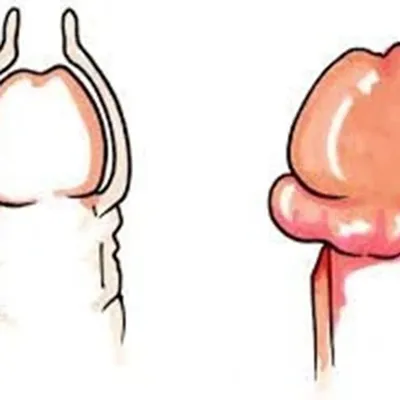
Paraphimosis is the condition in which a tight preputial ring, after being retracted over the glans, cannot be returned to its normal position. The ring acts as a constricting band (tourniquet), preventing venous and lymphatic return and gradually causing:
- Initial oedema of the glans and foreskin.
- Severe pain.
- Worsening oedema (vicious cycle — more oedema ⇒ tighter ring ⇒ even more oedema).
- Arterial ischaemia if not treated promptly.
- Necrosis and — in extreme cases — amputating necrosis.
It is important to distinguish paraphimosis from phimosis, the opposite condition (inability to retract the foreskin, see: phimosis). However, untreated phimosis is the most important predisposing factor for paraphimosis.
Causes and predisposing factors
Iatrogenic (most common)
Bladder catheterisation, cystoscopy or penile manipulation where the foreskin is forgotten in retracted position. Very common in inpatients.
Sexual activity
In patients with underlying phimosis or a tight preputial ring, retraction during intercourse or masturbation may lead to paraphimosis after returning to flaccid state.
Underlying phimosis / lichen sclerosus
The tight preputial ring in underlying phimosis or BXO is the main risk factor for paraphimosis.
Older patients and cognitive impairment
In older patients with reduced self-care capacity or dementia, forgetting to return the foreskin after hygiene is a frequent scenario.
Paediatric causes
Less common. Usually iatrogenic or after forceful retraction by parents or carers.
Other factors
Lymphoedema infiltration, local infection, diabetes (increased risk of complications), penile piercings.
Symptoms and clinical picture
The clinical picture is characteristic and diagnosis is usually immediate on inspection:
Early findings
- Foreskin trapped behind the glans
- Visible tight constricting ring
- Swollen and erythematous glans
- Pain and tenderness
- Difficulty or inability to reduce
Late findings — dangerous
- Severe and progressive preputial oedema
- Cyanotic or pale glans (ischaemia)
- Severe pain
- Lymphangitic streaks
- Skin necrosis
- Dysuria or inability to void
Red flags — immediate emergency department visit
- Cyanotic or white/pale glans — sign of ischaemia.
- Paraphimosis lasting > 4–6 hours.
- Severe progressive oedema.
- Fever or signs of infection (especially in a diabetic — suspicion of Fournier gangrene).
- Painful or impossible voiding.
- Local necrosis or blisters.
Diagnosis and assessment
Diagnosis is clinical and immediate. No imaging is required except in exceptional cases:
Rapid clinical inspection
Immediate recognition of trapped foreskin behind glans, assessment of the degree of oedema, evaluation of glans colour (pink/red/cyanotic/white).
Documenting time of onset
Critical information — determines emergency approach. Paraphimosis > 6 hours has increased risk of ischaemia.
Aetiology assessment
Recent catheterisation? Sexual activity? Underlying phimosis? BXO? Diabetes?
Wider clinical assessment
Fever, signs of sepsis, local signs of infection (especially in diabetics — exclude Fournier gangrene).
Assessment of oedema and ischaemia
Palpation of pulse on the glans, capillary refill time (CRT), search for blisters or necrotic lesions.
Common mistakes
Confusing paraphimosis with allergic oedema or preputial inflammation — the presence of the tight constricting ring behind the glans is the diagnostic key. Also, neglecting definitive therapy after reduction: without circumcision the risk of recurrence is high.
Emergency reduction — techniques
Reduction is performed with a stepwise approach. The choice of technique depends on time of onset and degree of oedema.
1. Analgesia first
Topical lidocaine 2% gel or dorsal/ring penile nerve block with lidocaine without adrenaline. Additionally, systemic analgesia (paracetamol ± IV opioids).
2. Oedema reduction (osmotic agents)
Application of concentrated sugar or 20% mannitol topically for 30–60 minutes — the osmotic mechanism significantly reduces local oedema. Alternatively: cold pack (ice in plastic bag) for 5–10 minutes.
3. Manual reduction — Dundee technique
Firm grip of the glans with thumbs and simultaneous posterior pressure, while fingers pull the foreskin forward. The Dundee technique adds multiple small puncture sites with a 26G needle in the oedematous glans for fluid release (useful in marked oedema), facilitating reduction.
4. Surgical release — dorsal slit
In failure of manual reduction: small longitudinal incision of the tight preputial ring on the dorsal surface, under local anaesthesia. Immediate decompression and reduction.
5. Emergency circumcision
Rare option — when there is ischaemia, necrosis or severe underlying pathology (lichen sclerosus with ulcers). Performed in theatre.
Treatment and definitive management
Management of paraphimosis has two phases: (1) emergency reduction and (2) definitive therapy for prevention of recurrence.
- Phase A — Emergency reduction: analgesia, cooling, osmotic agents, manual reduction or dorsal slit.
- Phase B — Post-reduction: assessment of glans for ischaemic signs, anti-inflammatory treatment, local care, antibiotics if infection present.
- Phase C — Definitive therapy: scheduling circumcision 2–4 weeks later (after resolution of oedema and inflammation).
- In underlying BXO: circumcision is mandatory and must be accompanied by histological examination.
- In older patients with catheter: education of carers on returning foreskin after every manipulation.
Important: Circumcision is the only reliable method for preventing paraphimosis recurrence. Postponing therapy often leads to a new episode. See: adult circumcision and phimosis.
Prevention of recurrence
- Return the foreskin to normal position after every retraction (hygiene, sexual activity).
- Meticulous education of older patients and carers in nursing facilities or home care.
- In patients with permanent catheter: protocol for foreskin replacement after every change or manipulation.
- Treatment of underlying phimosis or BXO with conservative therapy or circumcision before paraphimosis develops.
- In patients with history of paraphimosis: DEFINITIVE therapy with circumcision — do not wait for the next episode.
- Avoidance of forceful retraction in children.
Follow-up and prognosis
With timely reduction the prognosis is excellent. With definitive circumcision recurrence is virtually nil. In delayed presentation complications can be severe (necrosis, amputating necrosis, sepsis).
- Reassessment 24–48 hours after reduction — assess oedema, look for skin lesions.
- Schedule circumcision 2–4 weeks later as definitive therapy.
- After dorsal slit: review at 1 week to inspect healing.
- After circumcision: review at 2 weeks, 3 months, 12 months.
- In ischaemic events or necrosis: specialised plastic reconstruction may be required.
In summary: Paraphimosis is an emergency that is managed in time and effectively with the right technique. Definitive protection from a new episode is only ensured by planned circumcision.
Frequently asked questions (FAQ)
What is paraphimosis?
Paraphimosis is the inability to return the foreskin over the glans after retraction. The tight preputial ring becomes trapped behind the glans, acting as a constricting band and causing oedema and — if not treated — ischaemia.
Is it an emergency?
Yes. Paraphimosis is a urological emergency. The longer it lasts without reduction, the more oedema develops, the harder reduction becomes and the higher the risk of glanular ischaemia/necrosis. Immediate clinical assessment is required.
What are the most common causes?
Forceful or prolonged retraction of the foreskin (e.g. during intercourse, in older patients during hygiene, after catheterisation), in underlying phimosis, lichen sclerosus or local inflammation. Often occurs after medical procedures (catheterisation, cystoscopy).
How is reduction performed?
The initial approach is non-surgical: analgesia (local or systemic), local cooling, application of osmotic agents (concentrated sugar or mannitol for 30–60 minutes to reduce oedema) and manual reduction using the Dundee technique. If failed: dorsal slit incision or emergency circumcision.
When is circumcision needed?
In failure of manual reduction (emergency circumcision), but mainly as definitive treatment 2–4 weeks after the episode, to prevent recurrence. Circumcision is the only method to prevent a new paraphimosis episode.
How common is it?
In adults it is relatively rare but under-recognised. More common in older patients with a history of phimosis, in diabetics and in inpatients after catheterisation. In children it is rare and usually iatrogenic.
Can it be managed at home?
No. Self-treatment is dangerous because every minute of delay worsens oedema and increases ischaemic risk. Immediate visit to an emergency department or urologist is required. At home you can only apply cooling until transport.
What complications occur if untreated?
Severe oedema, glanular or preputial skin necrosis, ischaemic ulcers, severe infections (Fournier gangrene in diabetics), amputating necrosis in extremely delayed presentation. Traumatic ischaemic damage may require extensive surgical reconstruction.
Related Topics
Book your appointment in Rhodes
For history of paraphimosis or predisposing phimosis, definitive management with planned circumcision provides long-term protection from any recurrence.
Scientific References
- EAU Guidelines on Urological Trauma (2024) — Penile emergencies — uroweb.org
- Little B, White M. Treatment options for paraphimosis. Int J Clin Pract 2005;59(5):591-3 — pubmed.ncbi.nlm.nih.gov
- Pohlman GD, Phillips JM, Wilcox DT. Simple method of paraphimosis reduction revisited. J Pediatr Urol 2013;9(1):104-7 — pubmed.ncbi.nlm.nih.gov
- Anand A, Kapoor S. Mannitol for paraphimosis reduction. Urol Int 2013;90(1):106-8 — pubmed.ncbi.nlm.nih.gov
Meet the Physician

Dr. Marinos Vasilas, Urology Surgeon – Andrologist
Dr. Marinos Vasilas manages urological emergencies such as paraphimosis with expertise and provides definitive treatment via microsurgical adult circumcision for prevention of recurrence.
View full profile


