Surgical Emergency
Any patient with suspected Fournier's gangrene must be transferred immediately to a hospital emergency department with surgical urological coverage. Every hour of delay from symptom onset increases mortality. Surgical debridement should occur within 24 hours of diagnosis.
Red flags: pain disproportionate to clinical findings, subcutaneous crepitus, black skin patches, foul odor, septic decompensation.
My Clinical Approach
In Fournier's gangrene, time is life. My experience focuses on rapid recognition of high-risk patients (diabetics with perineal pain and fever) and immediate referral for surgical intervention.
Alongside surgery, I implement a sepsis protocol: broad-spectrum antibiotics within 1 hour (piperacillin/tazobactam + clindamycin + vancomycin), aggressive fluid resuscitation, glycemic control.
Postoperative care is long-term: repeat reoperations every 24–48 hours for necrosis reassessment, hyperbaric oxygen therapy (where available), and plastic reconstruction after the healing phase.
What is Fournier's Gangrene?
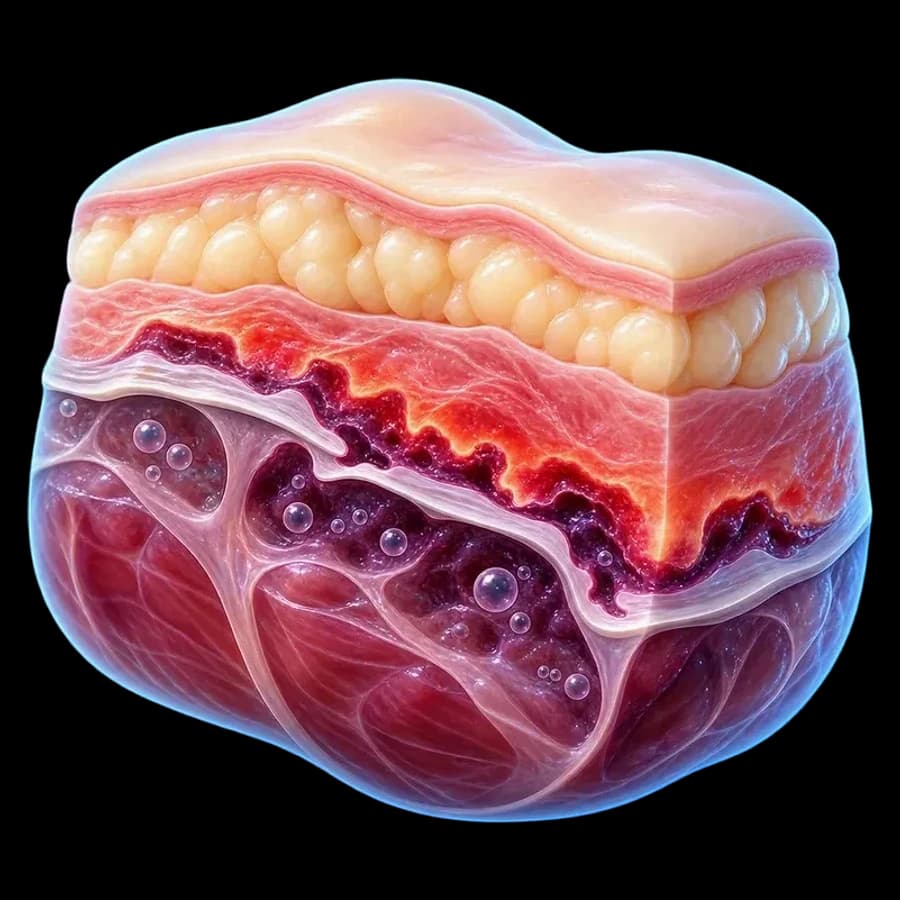
Fournier's gangrene is a polymicrobial type I necrotizing fasciitis of the perineal, genital, and perianal region. Described by Jean-Alfred Fournier in 1883.
- Incidence: 1.6/100,000 men annually
- Male:female ratio = 10:1
- Mean age: 50–70 years
- Polymicrobial (aerobic + anaerobic)
- Rapid spread: 2–3 cm/hour along fascial planes
Symptoms
- Severe scrotal/perineal pain disproportionate to findings
- High fever (>38.5°C), chills
- Erythema and scrotal edema
- Subcutaneous crepitus (gas presence)
- Foul odor (necrosis)
- Black skin patches (late sign)
- Septic shock signs: tachycardia, hypotension, confusion
Risk Factors
Systemic
- • Diabetes mellitus (60% of cases)
- • Immunosuppression (HIV, chemotherapy, steroids)
- • Obesity, alcoholism
- • Chronic kidney disease, hepatopathy
- • Age >50
Local
- • Perianal abscesses, hemorrhoids, fistulas
- • Urological infections (epididymitis, prostatitis)
- • Recent surgery/catheterization
- • Trauma or perineal burn
Diagnosis
Primarily clinical. Imaging should not delay surgery.
- Clinical examination: palpation, inspection, crepitus assessment
- Blood work + LRINEC score (Laboratory Risk Indicator for Necrotizing Fasciitis)
- CT of scrotum/pelvis (tissue gas — pathognomonic)
- Tissue and blood cultures (antibiotic selection)
- Blood gases, lactate (sepsis severity)
Treatment
1. Emergency surgical debridement
Immediate extensive excision of all necrotic tissue to healthy margins. Repeat second-look operations every 24–48 hours. Often requires colostomy or cystostomy.
2. Antibiotics (IDSA 2014)
Piperacillin/tazobactam 4.5 g IV/6h or carbapenem + clindamycin 600–900 mg IV/8h (anti-toxin) + vancomycin (MRSA cover). Duration: until clinical improvement + 48–72 hours.
3. Supportive
- • Crystalloid resuscitation
- • Strict glycemic control
- • ICU often needed
- • Hyperbaric oxygen therapy (where available)
Prognosis & Recovery
Mortality ranges 20–40%, with significant prognostic factors including age, extent of necrosis at diagnosis, sepsis, and comorbidities. Indices like the FGSI (Fournier Gangrene Severity Index) help risk stratification.
Survivors require long-term recovery: repeat surgeries, skin grafts, scrotal plastic reconstruction, psychological support.
Frequently Asked Questions (FAQ)
Is Fournier's gangrene a true emergency?
Yes. It is a surgical emergency necrotizing fasciitis of the scrotum and perineum with mortality of 20–40% if untreated. Immediate surgical debridement is required within hours of diagnosis.
What are the risk factors?
Diabetes mellitus (in 60% of patients), immunosuppression, alcoholism, obesity, chronic kidney disease, recent perineal surgery or trauma, age >50.
What is the first symptom?
Severe pain disproportionate to clinical findings in the scrotum or perineum, often with high fever. Soon followed by erythema, edema, crepitus, and characteristic foul odor from necrosis.
Which antibiotics are used?
Broad-spectrum empiric coverage: piperacillin/tazobactam or carbapenem + clindamycin (for toxin suppression) + vancomycin (for MRSA), per IDSA 2014 guidelines. Adjust per culture.
What is the long-term prognosis?
With timely surgery + antibiotics, survival reaches 70–90%. Many patients require multiple operations and plastic reconstruction. Almost all have prolonged hospitalization (4–6 weeks).
Urological Care in Rhodes
If Fournier's gangrene is suspected, proceed immediately to the emergency department. For follow-up after surgery or risk-factor evaluation, you may book an office appointment.
References
- Stevens DL et al. IDSA Guidelines for Skin and Soft Tissue Infections. Clin Infect Dis 2014 — PMID: 24973422
- EAU Guidelines on Urological Infections, 2024 update — uroweb.org
- Eke N. Fournier's gangrene: a review of 1726 cases. Br J Surg 2000 — PMID: 10792317
Medical review

Dr. Marinos Vasilas, Urologist – Andrologist
Dr. Marinos Vasilas runs a private urological practice in Rhodes and collaborates with local hospitals for the management of urological emergencies including necrotizing infections.
View full bio


