My Clinical Approach
Orchitis has significant long-term implications for fertility and hormonal function. In my evaluation, I immediately distinguish bacterial from viral cause and look for recent parotitis or history of MMR non-vaccination.
In every case I pay close attention to quality of life after the acute phase: I systematically follow testicular size, hormonal function (testosterone), and semen analysis at 3 and 6 months, especially for bilateral involvement.
For young patients planning fatherhood with bilateral mumps orchitis, I discuss sperm cryopreservation before potential atrophy.
What is Orchitis?
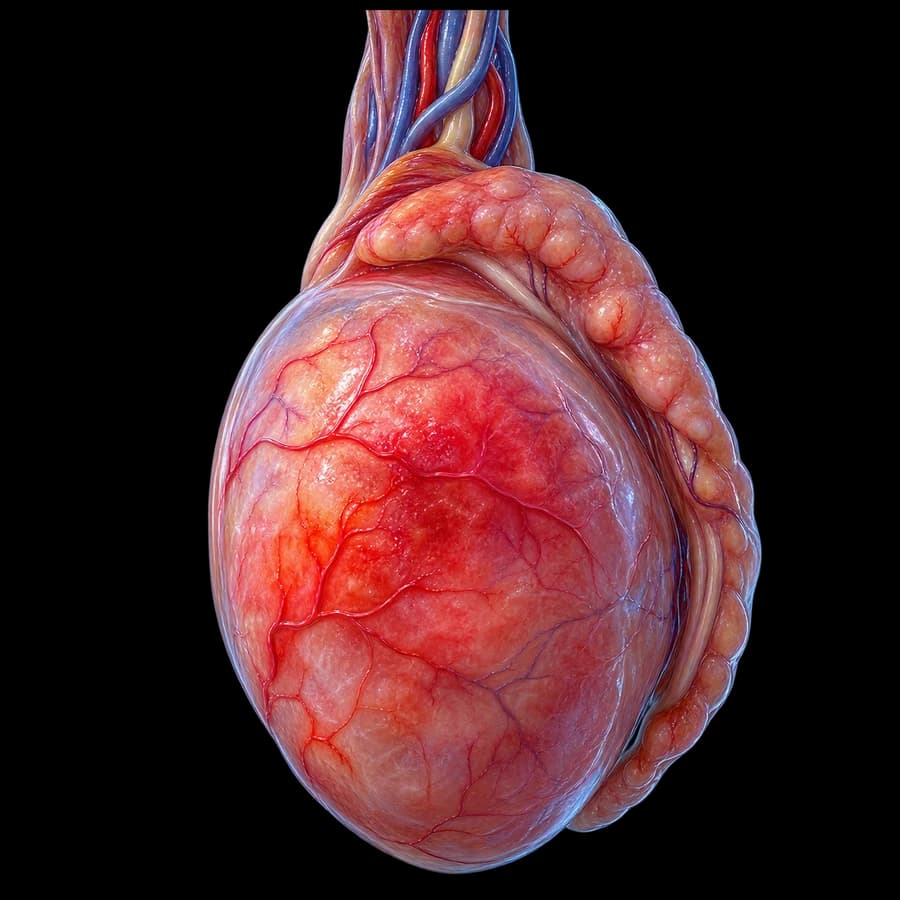
Orchitis is testicular inflammation that may present as an isolated entity (viral mumps orchitis) or as extension of epididymal inflammation (epididymo-orchitis).
- Bacterial orchitis: usually as extension of epididymitis
- Viral orchitis: mainly from mumps
- Granulomatous orchitis: rare, chronic form
- Incidence: 0.5% in men >18 years annually
Symptoms
- Severe testicular pain and swelling (unilateral or bilateral)
- High fever (38–40°C)
- Heaviness in the scrotum
- Nausea and vomiting
- In mumps orchitis: preceding parotitis 4–7 days prior
- In bacterial: associated UTI symptoms (dysuria, frequency)
Causes
Viral
- • Mumps virus — most common viral cause
- • Coxsackie, EBV, Epstein-Barr
- • HIV, hepatitis, varicella zoster
Bacterial
- • E. coli, Klebsiella, Proteus
- • Chlamydia, Gonococcus (sexually active young men)
- • Tuberculosis, Brucella (rare)
Risk factors
- • MMR non-vaccination
- • Prostatic hyperplasia, urethral catheter
- • Unprotected sexual activity
Diagnosis
- Clinical examination and palpation
- Color Doppler scrotal ultrasound (increased testicular flow)
- Urinalysis and urine culture
- Blood work (CRP, white cells)
- IgM/IgG for mumps if viral suspected
- Urethral PCR swab (young men)
- Exclusion of testicular torsion (especially in young men)
Treatment
Bacterial orchitis
Antibiotics per EAU 2024 (as for epididymitis): ceftriaxone + doxycycline or fluoroquinolone for 10–14 days. For sepsis: inpatient IV therapy.
Viral (mumps)
No specific antiviral. Supportive treatment: rest, scrotal elevation, ice packs, paracetamol, NSAIDs. Symptom duration: 5–7 days.
Complications
For abscess formation: surgical drainage. Rare: orchiectomy in extensive necrosis.
Fertility
Mumps orchitis causes testicular atrophy in 30–50% of unilateral cases. Bilateral involvement (10–30%) is associated with subfertility in 13% of patients.
Semen analysis at 3 and 6 months after the acute phase and hormonal evaluation (testosterone, FSH, LH) are recommended. For bilateral involvement in young men, sperm cryopreservation is discussed.
Follow-up & Prevention
- Reevaluation at 7–14 days
- Ultrasound at 6 weeks (atrophy assessment)
- Semen analysis at 3 & 6 months
- Annual hormonal evaluation if atrophy present
Prevention
MMR vaccination (2 doses in childhood) reduces mumps risk >95%. Safe sexual practices and timely treatment of UTIs prevent bacterial forms.
Frequently Asked Questions (FAQ)
Is orchitis more often viral (mumps) or bacterial?
In adults, most cases are bacterial and present as epididymo-orchitis. Viral orchitis (mumps) occurs mainly in unvaccinated adolescents and young adults, 4–7 days after parotitis.
Can mumps orchitis cause infertility?
Around 30–50% of cases lead to some testicular atrophy. Bilateral involvement (10–30%) may cause subfertility. A semen analysis 6 months post-recovery is recommended.
Is there an antiviral treatment for mumps orchitis?
No specific antiviral. Treatment is supportive: rest, scrotal elevation, ice packs, NSAIDs. The best prevention is MMR vaccination (2 doses in childhood).
When is hospitalization needed?
For high fever, sepsis signs, abscess formation, or immunocompromised patients. Outpatient treatment suffices in most cases.
Can it become chronic?
In incomplete treatment or immunocompromised patients, acute orchitis may evolve into a chronic granulomatous form or form an abscess requiring surgical drainage.
Book Your Appointment in Rhodes
Testicular pain and swelling with fever require urgent urological evaluation to differentiate from torsion and select appropriate therapy.
References
- EAU Guidelines on Urological Infections, 2024 update — uroweb.org
- CDC Mumps surveillance — cdc.gov
- Davis NF et al. The increasing incidence of mumps orchitis. BJU Int 2010 — PMID: 20438568
Medical review

Dr. Marinos Vasilas, Urologist – Andrologist
Dr. Marinos Vasilas runs a private urological practice in Rhodes with clinical experience in managing acute scrotal inflammation, orchitis, and epididymo-orchitis across all age groups.
View full bio


