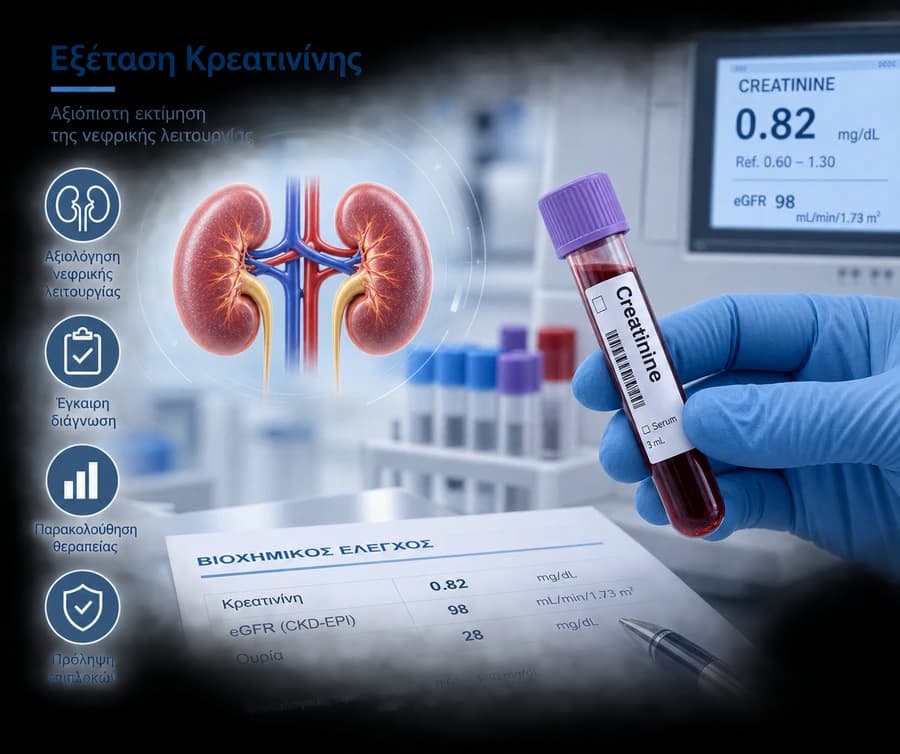
Creatinine and eGFR: how to read them correctly
Creatinine alone has limitations because it is affected by muscle mass and other factors.
eGFR offers a more functional assessment and allows staging of chronic kidney disease.
Consistent with normal function
A stable eGFR with no accompanying abnormal urine or imaging findings.
Moderate functional impairment
Requires closer monitoring and adjustment of treatment choices.
Severe functional decline
Requires urgent, systematic nephrology and urology assessment.
When it is critical in urology
Particularly in:
- obstructive uropathy
- stone disease with possible kidney impairment
- pre-operative screening
- choosing contrast-enhanced imaging studies
- adjusting medication doses
The dynamics of change and clinical decision-making
The trend over time is highly valuable:
- a gradual rise: possible chronic deterioration
- a sudden rise: possible acute kidney injury
- improvement after decompression: a sign of reversibility
Practical implications for treatment
Kidney function affects:
- the choice and dose of antibiotics
- the safety of contrast-enhanced imaging studies
- the planning of procedures
Creatinine is therefore not a "routine" test, but a decisive factor in clinical planning.


