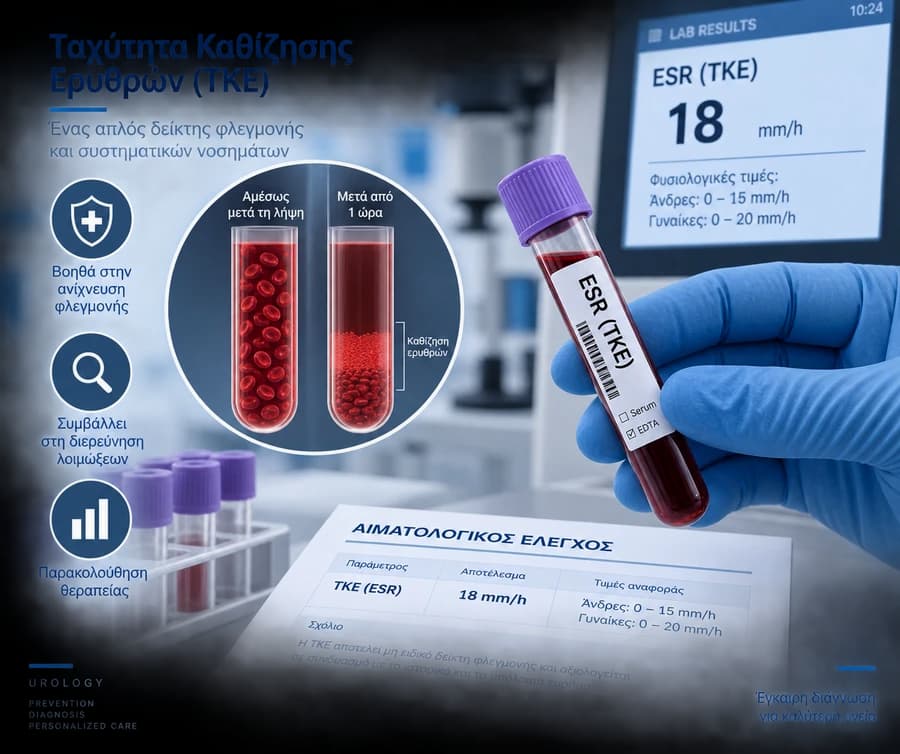
What ESR shows
ESR reflects changes in acute-phase proteins and is influenced by many factors.
It does not pinpoint a cause, but it indicates that systemic inflammatory activity may be present.
When it has a role in urological practice
It is mainly useful in:
- prolonged inflammatory syndromes
- monitoring the course of chronic conditions
- differential diagnosis when systemic symptoms are also present
Low/stable ESR
Often consistent with low inflammatory activity, though not an absolute criterion.
Moderate elevation
Requires correlation with CRP, hematology, and the clinical picture.
Significant elevation
Strengthens the need for a systematic work-up of possible active disease.
How ESR differs from CRP
CRP changes faster and often reflects the acute phase better.
ESR changes more slowly and can remain elevated for longer, which is why it is mainly useful for monitoring trends over time.
Limitations of the test
ESR is influenced by:
- age
- anemia
- other non-infectious causes
It should therefore never be interpreted in isolation, without the clinical context.


