Clinical Perspective
In clinical practice, the key first step is to clarify whether the concern is mainly about a reproductive goal or about bothersome symptoms. This distinction determines how extensive the work-up should be and which treatment options genuinely make sense for that particular patient.
Key Takeaways
- Retrograde ejaculation is usually not dangerous to general health.
- It has significant clinical relevance mainly for men trying to conceive.
- Common causes include prostate procedures, diabetic neuropathy, and medications.
- The diagnosis is confirmed with a targeted test after orgasm.
- Patient education reduces anxiety and mistaken expectations.
What Is Retrograde Ejaculation?
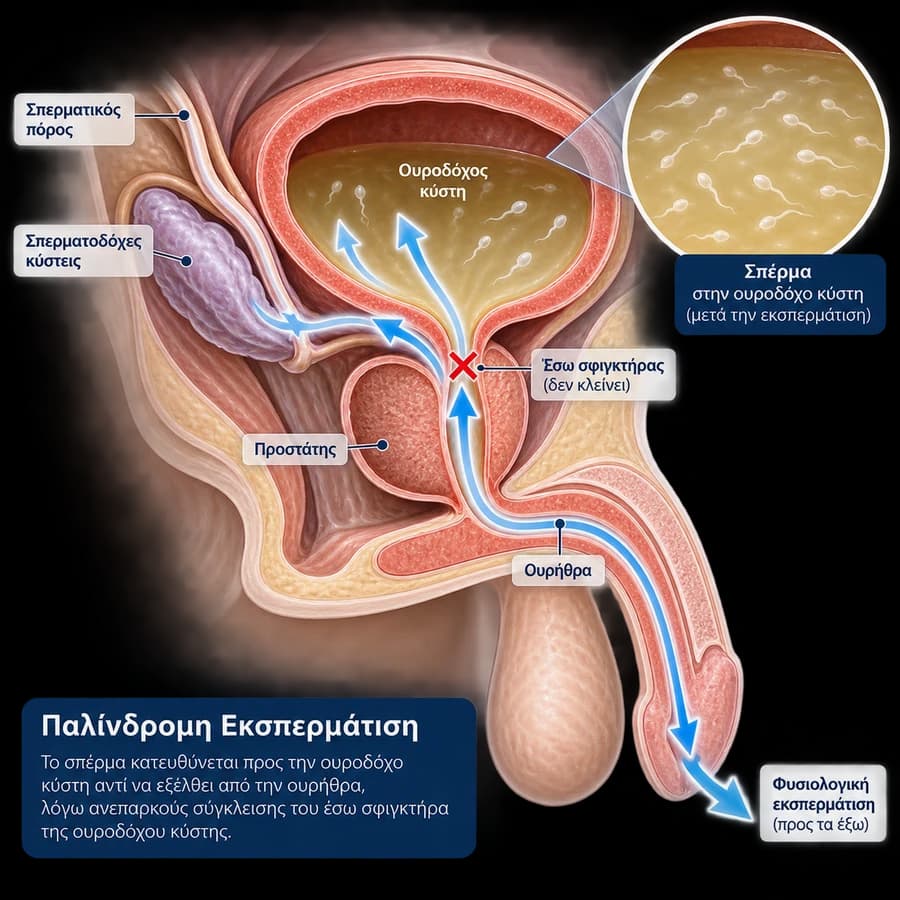
In retrograde ejaculation, the bladder neck does not close properly during orgasm, causing semen to travel into the bladder instead.
How Patients Typically Describe It
- dry orgasm
- very little semen
- cloudy urine after orgasm
- orgasm without ejaculation
Symptoms That Often Occur Together
- reduced semen volume
- infertility
- cloudy urine after orgasm
What Are the Most Common Causes
Prostate procedures
TURP, HoLEP, and other treatments can cause retrograde ejaculation.
Diabetes or neuropathy
Can affect the function of the bladder neck.
Medications
Certain medications for the prostate or psychiatric conditions affect ejaculation.
When It May Be Harmless — and When It Is Not
Less Concerning
If there is no desire to conceive and it does not bother the patient, it often does not require treatment.
Needs Attention
The finding is more significant when it is new, persistent, combined with infertility, or occurs alongside neurological symptoms or blood in the urine.
When Immediate Medical Evaluation Is Needed
- a sudden change with neurological symptoms
- blood in the urine
- pain or infection
How the Diagnosis Is Made and Which Tests May Be Needed
The diagnosis relies on history and confirming the presence of sperm in the urine after ejaculation. Possible neurogenic, medication-related, or post-surgical causes are evaluated at the same time, together with the patient’s reproductive priorities.
medication and surgical history
post-ejaculation urinalysis for sperm
semen analysis
hormonal testing when indicated
How It Differs From Similar Symptoms
Must be distinguished from anejaculation, delayed ejaculation, and reduced semen volume.
What to Expect at Your First Medical Evaluation
Report whether the change was sudden or gradual, any history of prostate procedures, diabetes, medications, and whether you have a goal of conceiving. This information helps prioritize which tests are needed.
The information in this article is general and does not replace an individualized medical examination. If your symptoms persist, recur, or are accompanied by red-flag warning signs, please schedule an evaluation with a urologist.
Book an appointmentFrequently Asked Questions
Is retrograde ejaculation dangerous?
Usually not for your general health, but it can affect fertility.
How is the diagnosis confirmed?
With a urine test after orgasm to detect sperm, combined with your clinical history.
Can it be caused by prostate procedures?
Yes, it is a common change after certain procedures.
Does it always affect sexual satisfaction?
Not necessarily. Many men retain a normal orgasm sensation but are bothered by the absence of external ejaculation.
When is treatment needed?
Mainly when there is a reproductive goal or significant bother from the symptom.
Can it be related to diabetes?
Yes, through neuropathy affecting the bladder neck.
Medical Review

Dr. Marinos Vasilas, Surgical Urologist — Andrologist
This content has been written and reviewed based on established urological guidelines, with the goal of providing practical, safe guidance for the initial assessment of each symptom.
View full profileSources / References
Book an Appointment for a Personalized Evaluation
If the symptom persists, recurs, or is accompanied by red-flag warning signs, prompt evaluation by a urologist supports an accurate diagnosis and targeted treatment.


