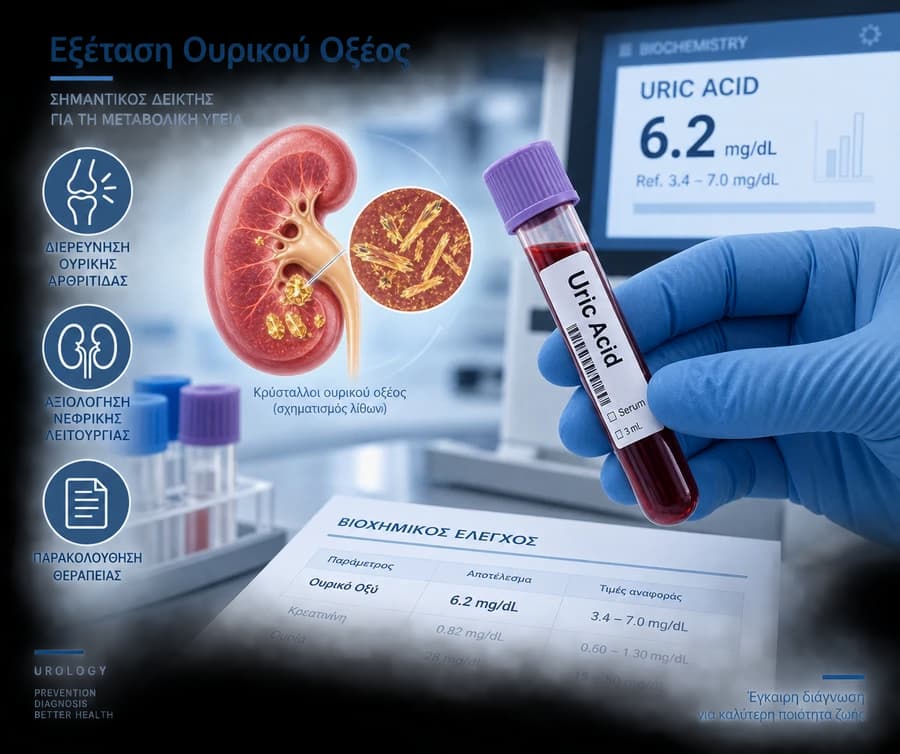
What it measures and how it relates to urology
Uric acid is related to:
- the risk of forming uric acid stones
- the metabolic profile and urine pH
- coexisting gout
The value is interpreted together with a history of stone disease and urine biochemistry.
Clinical indications
Common indications:
- recurrent kidney stones
- suspected uric acid stone disease
- follow-up after a metabolic intervention
- coexisting gout
Low metabolic risk
Values and clinical profile without strong indications of hyperuricemia or stone formation.
Moderate risk
Borderline values with a history of stone disease call for dietary and metabolic intervention.
High risk of stone formation
Significant hyperuricemia together with a consistent history increases the need for targeted prevention.
Relationship with urine pH and diet
Uric acid stone disease is strongly influenced by acidic urine pH.
Dietary changes, adequate hydration, and, where indicated, urine alkalinization are central to prevention.
Monitoring and preventing recurrence
The test is used over time to:
- assess the response to lifestyle changes
- adjust medication where needed
- reduce the risk of new stone episodes


