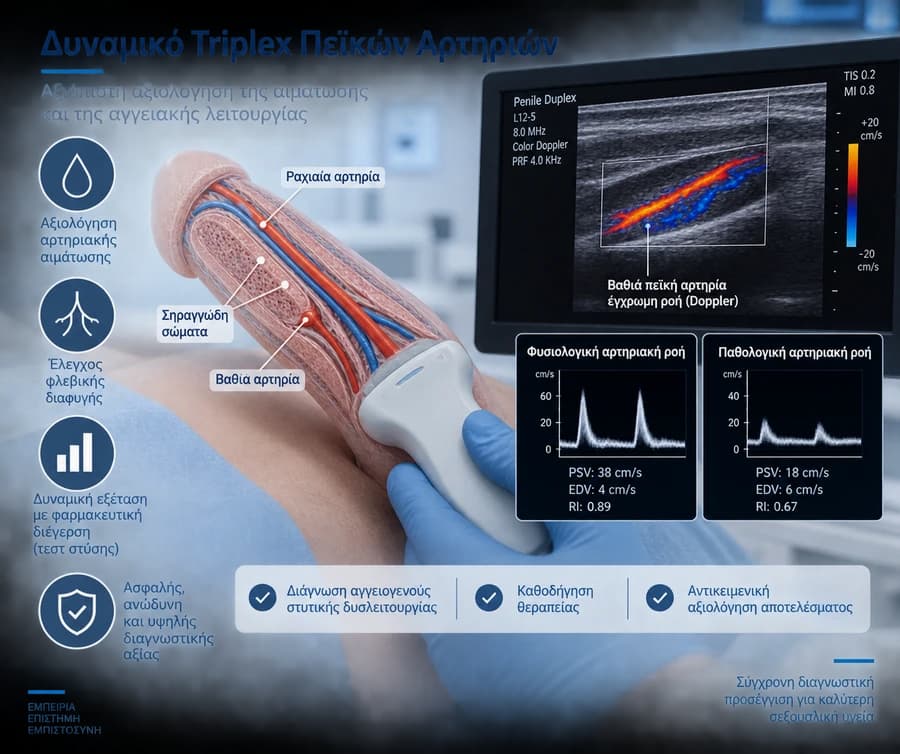
What the test measures
After an intracavernosal pharmacological injection, the following are recorded:
- peak systolic velocity (PSV)
- end-diastolic velocity (EDV)
- resistive index (RI)
- timing and filling dynamics
These indices help distinguish arterial insufficiency from venous leakage.
When it is indicated
It is mainly indicated in:
- erectile dysfunction with suspected vascular etiology
- inadequate response to PDE5 inhibitors
- pre- or post-operative vascular assessment
- cases where objective documentation of the cause is required
Good arterial response
Adequate filling dynamics with consistent hemodynamic values.
Borderline hemodynamic picture
Intermediate values that require clinical correlation and a treatment trial.
Clear vascular abnormality
Findings consistent with arterial insufficiency and/or venous leakage.
Preparation and practical details
The test is performed in a specialized setting:
- a brief history is taken to rule out contraindications to the pharmacological injection
- ultrasound recordings are taken at specific time points
- monitoring after completion for safety
Correct technique is essential for a reliable interpretation.
Impact on treatment
Dynamic penile Doppler helps guide treatment selection:
- vascular cause: a targeted pharmacological/surgical approach
- non-vascular cause: avoids unnecessary vascular interventions
- venous leakage: a different treatment plan
This reduces "blind" management of erectile dysfunction.


