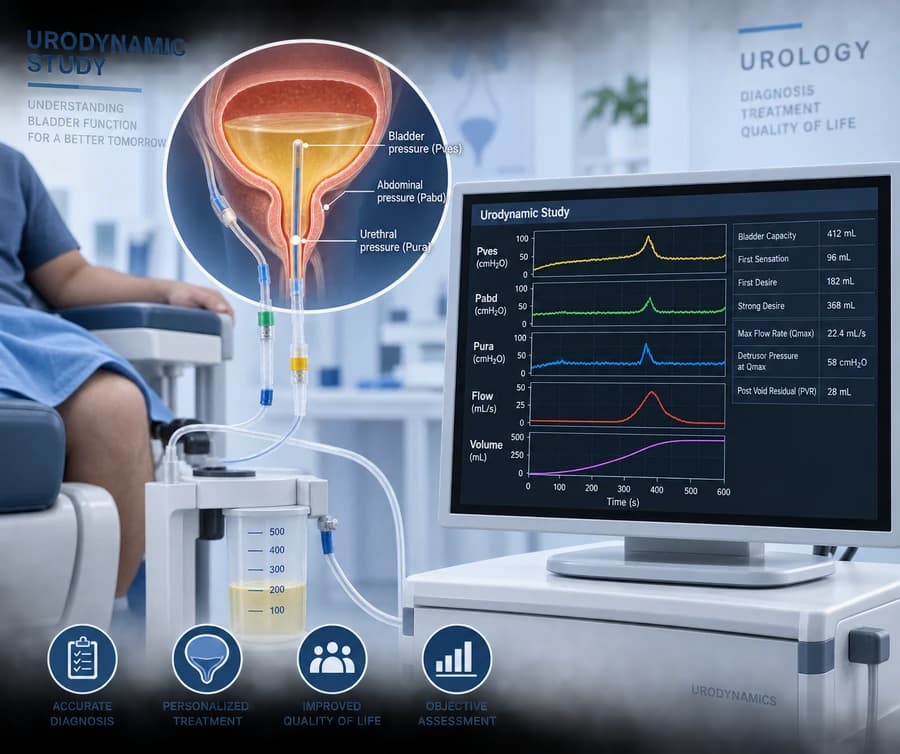
What urodynamic testing measures
The test combines several parameters:
- bladder filling pressures
- detrusor pressure (Pdet)
- bladder compliance
- first sensation and strong desire to void
- the pressure-flow relationship during voiding
- in selected cases, electromyographic correlation of the pelvic floor
Its key advantage is distinguishing whether the problem is obstructive, neurogenic, myogenic, or mixed.
Functionally balanced picture
Adequate capacity, good compliance, no abnormal filling contractions, and a consistent pressure-flow voiding pattern.
Mixed or borderline dysfunction
Mild pressure/flow abnormalities that call for individualized treatment and re-evaluation based on symptoms.
Clinically significant dysfunction
High pressures with low flow and/or a hazardous filling pattern call for immediate treatment planning.
Main indications in everyday practice
Urodynamic testing is recommended when:
- there is persistent LUTS with an unclear mechanism
- previous treatment has failed
- a neurogenic bladder is suspected
- an invasive intervention is planned and functional documentation is needed
- storage and voiding symptoms coexist without a clear cause
It is not a routine test for every patient with straightforward urological symptoms.
How the test is performed
The test is performed in a specialized setting:
- a bladder catheter is placed to measure pressures
- abdominal pressure is recorded (often via a rectal catheter)
- the bladder is filled in a controlled manner while sensations/pressures are recorded
- the voiding phase is then measured with pressure-flow analysis
The procedure usually takes 20-45 minutes and may cause mild discomfort, not significant pain.
Interpretation and impact on treatment
The real value of the test is that it changes treatment decisions:
- an obstructive pattern: strengthens the case for surgical decompression
- an overactive detrusor: guides toward pharmacological or neuromodulation therapy
- an underactive detrusor: avoids inappropriate surgery and emphasizes voiding strategies
- mixed patterns: combined protocols and closer follow-up
This helps avoid treatment mistakes in patients with complex pathophysiology.


