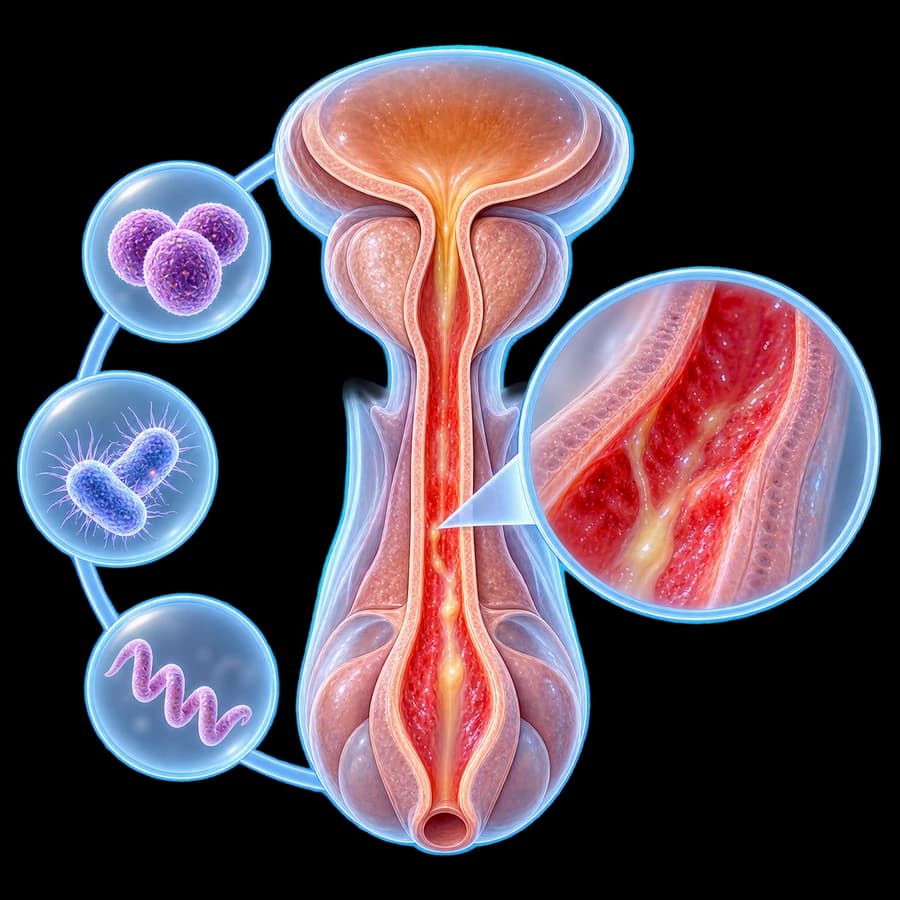
What is Urethritis
Urethritis is defined as inflammation of the urethra. It is classified as:
- Gonococcal (GU): Neisseria gonorrhoeae — heavy purulent discharge, acute onset.
- Non-gonococcal (NGU): Chlamydia trachomatis (~50%), Mycoplasma genitalium, Trichomonas vaginalis, HSV — slower onset, milder symptoms.
Symptoms
- Dysuria — burning/stinging on urination.
- Urethral discharge: clear/whitish (NGU), thick purulent (gonococcus).
- Urethral itching or irritation.
- Urinary frequency and urgency.
- Pain or discomfort with ejaculation.
- In women: milder symptoms — dysuria, increased vaginal discharge.
- Asymptomatic course in ~50% of cases (mainly chlamydia) — high transmission risk.
Causes & Risk Factors
- Unprotected sexual intercourse (main route of transmission).
- Multiple sexual partners.
- Young age (15–24 years).
- History of other sexually transmitted infections.
- Non-infectious causes: catheter trauma, chemical irritation, Reiter syndrome (reactive arthritis).
Diagnosis
NAAT (method of choice)
Nucleic Acid Amplification Test on first-void urine or urethral swab. Sensitivity >95% for chlamydia, gonococcus and Mycoplasma genitalium.
Culture & sensitivity
Essential for gonococcus (rising cephalosporin resistance). Gram stain shows intracellular Gram-negative diplococci.
STI screening
HIV, syphilis (VDRL/RPR), hepatitis B and C — mandatory in every new STI diagnosis.
Treatment
Gonococcal urethritis
Ceftriaxone 500mg IM single dose + Doxycycline 100mg twice daily for 7 days (covers ~30% chlamydia co-infection).
Non-gonococcal urethritis (NGU)
Doxycycline 100mg twice daily for 7 days (first-line for chlamydia). Alternative: azithromycin 1g single dose. For M. genitalium: moxifloxacin 400mg once daily for 7–10 days (if azithromycin resistance).
Partner treatment
Mandatory for all sexual partners of the past 60 days. Avoid sexual intercourse for 7 days after starting treatment.
Prevention & Complications
- Consistent condom use with new or multiple partners.
- Annual chlamydia screening in sexually active <25 years.
- Prompt medical attention at first symptoms.
- Avoid self-medication — drives antibiotic resistance.
Untreated complications:
- Epididymitis and orchitis.
- Chronic prostatitis.
- Urethral strictures (post-gonococcal).
- Pelvic inflammatory disease (PID) in women.
- Male and female infertility.
- Disseminated gonococcal infection: arthritis, endocarditis, meningitis.
Frequently Asked Questions about Urethritis
What is urethritis?
Urethritis is inflammation of the urethra, the tube that carries urine from the bladder out of the body. It is classified as gonococcal (Neisseria gonorrhoeae) or non-gonococcal (mainly Chlamydia trachomatis, Mycoplasma genitalium).
What are the symptoms?
Dysuria (burning on urination), urethral discharge (clear or purulent), urethral itching, urinary frequency and urgency. In women, symptoms may be milder or absent.
How is it diagnosed?
NAAT (Nucleic Acid Amplification Test) on first-void urine or urethral swab for chlamydia and gonococcus. Culture and sensitivity testing is required for gonococcus due to rising antibiotic resistance.
How is it treated?
Gonococcal: ceftriaxone 500mg IM single dose + doxycycline 100mg twice daily for 7 days (also covers chlamydia). Non-gonococcal: doxycycline 100mg twice daily for 7 days or azithromycin 1g single dose. Partner treatment is mandatory.
Is it sexually transmitted?
Yes, in most cases. Screening for other STIs (HIV, syphilis, hepatitis B/C) is required. Avoid sexual intercourse for 7 days after starting treatment and until partner is treated.
Conclusion
Urethritis is fully curable with targeted antibiotic therapy and concurrent partner treatment. Early diagnosis prevents serious complications.
Scientific References
- EAU Guidelines on Urological Infections 2024 — uroweb.org
- CDC STI Treatment Guidelines 2021. MMWR Recomm Rep 2021;70(4):1-187.
- Workowski KA et al. Sexually Transmitted Infections Treatment Guidelines. MMWR 2021.
- Horner PJ et al. 2016 European guideline on the management of non-gonococcal urethritis. Int J STD AIDS 2016;27:928-937.
Meet the Doctor

Dr. Marinos Vasilas, Urological Surgeon – Andrologist
Specialising in comprehensive management of sexually transmitted urological infections with modern NAAT diagnostics and targeted antibiotic therapy.
Read full profile


