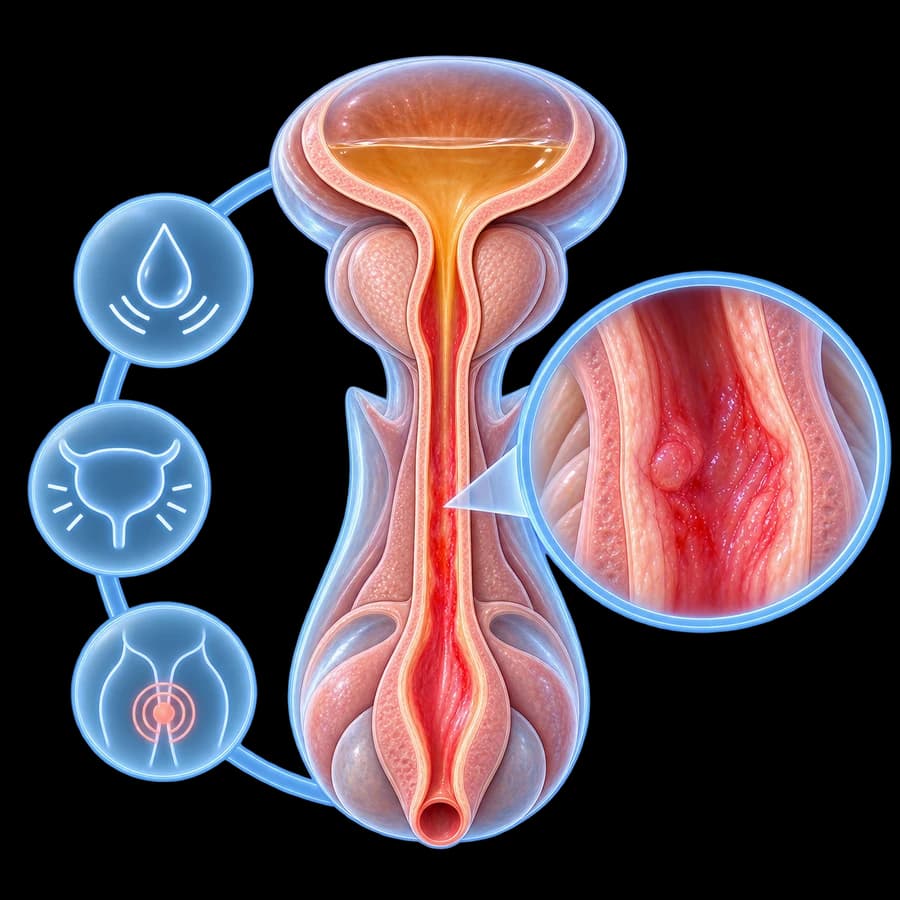
What is Urethral Syndrome
Urethral syndrome is a clinical entity characterized by persistent lower urinary tract symptoms — dysuria, frequency, urgency, suprapubic pain — without objective evidence of infection (negative cultures) or other organic disease.
Affects mainly women aged 30–50 (female:male ratio 7:1). Estimated prevalence ~5% in reproductive-age women. Frequently part of the chronic pelvic pain syndrome spectrum.
Causes
- Pelvic floor hypertonicity — most common mechanism. Pelvic floor spasm causes urethral compression.
- Post-menopausal genitourinary atrophy (estrogen deficiency).
- Neurogenic inflammation — increased nerve ending sensitivity (neuropathic pain).
- Chronic subclinical infections from Mycoplasma, Ureaplasma, Chlamydia — not detected on standard cultures.
- Chemical irritants — spermicides, fragrances, alkaline solutions, caffeine.
- Psychosocial factors — anxiety, depression, traumatic sexual experience.
- Bladder neck obstruction or functional urethral stenosis disorders.
Symptoms
- Dysuria — burning/pain on urination.
- Frequency — >8 voids/day.
- Urgency — sudden urge to urinate.
- Suprapubic or urethral pain (constant or post-voiding).
- Dyspareunia — pain during intercourse.
- Nocturia.
- Sense of incomplete emptying.
- Chronic pelvic pain.
Hallmark: symptoms persist or recur despite repeated antibiotic therapy.
Diagnosis
Diagnosis of exclusion — every other etiology must be ruled out:
1. Urine cultures
Multiple negative cultures (including specific testing for Mycoplasma, Ureaplasma, Chlamydia).
2. Cystoscopy
Rule out interstitial cystitis (glomerulations), stones, neoplasm, urethral diverticulum.
3. Urodynamics
Search for sphincter dyssynergia, hypertonicity, functional obstruction.
4. Pelvic floor evaluation
Palpation of trigger points (myofascial pain), muscle tone assessment by trained physiotherapist.
5. Adjuncts
Gynecologic exam (rule out vaginitis, atrophy), pelvic MRI in refractory cases.
Treatment
Individualized multimodal approach:
First-line — Conservative
- Pelvic floor physiotherapy: myofascial release, trigger point therapy, biofeedback. Best outcomes.
- Dietary advice: avoid caffeine, alcohol, spicy foods, artificial sweeteners.
- Adequate hydration (1.5–2 L/day).
Second-line — Pharmacologic
- Topical estrogens (post-menopausal women) — restore urogenital epithelial trophism.
- Alpha-blockers (tamsulosin) — for bladder neck hypertonicity.
- Neuromodulators: low-dose amitriptyline (10–25 mg at night), gabapentin, pregabalin.
- Empirical anti-Mycoplasma: trial of doxycycline or azithromycin if Mycoplasma/Ureaplasma suspected.
Third-line — Interventional
- Botulinum toxin injection in external urethral sphincter — for documented dyssynergia.
- Neuromodulation (PTNS, Sacral Neuromodulation) — refractory cases.
- Urethral dilatation: NO LONGER recommended as first-line — historical treatment with questionable efficacy.
Management & Flare Prevention
- Stress management — yoga, mindfulness, CBT.
- Avoid irritants (coffee, alcohol, chili, citrus).
- Sexual hygiene: post-coital voiding, water-based lubricants.
- Steady hydration and balanced urine pH.
- Choose appropriate hygiene products (no fragrances, no spermicides).
- Regular gynecologic check-ups.
FAQ
What is urethral syndrome?
A clinical entity with lower urinary tract symptoms (frequency, urgency, dysuria, suprapubic pain) without objective evidence of infection or other organic cause. Affects mainly women of reproductive age.
What are the causes?
Multifactorial. Possible: post-menopausal genitourinary atrophy, pelvic floor hypertonicity, neurogenic inflammation, allergens, psychogenic factors, occult urethral infections (Mycoplasma, Ureaplasma).
How is it diagnosed?
Diagnosis of exclusion. Negative urine cultures, normal cytology, normal cystoscopy. Screening for STIs, urodynamics, pelvic floor evaluation.
What is the treatment?
Multimodal: pelvic floor physiotherapy (myofascial release), topical estrogens post-menopause, low-dose tricyclics (amitriptyline), gabapentin/pregabalin. Urethral dilatation is no longer recommended as first-line.
Is it a permanent problem?
Many patients experience chronic course with flares and remissions. With proper multimodal management, symptoms are effectively controlled in most cases.
Conclusion
Urethral syndrome requires patience, accurate exclusion diagnosis, and a holistic approach. Cooperation between urologist, pelvic floor physiotherapist and — when needed — psychologist is the key to successful outcomes.
Scientific References
- EAU Guidelines on Chronic Pelvic Pain 2024 — uroweb.org
- Stamm WE. Urethral Syndrome — Diagnosis and Management. NEJM 2002.
- Engeler D et al. EAU Chronic Pelvic Pain Panel — Update 2023.
- Hooton TM, Stamm WE. Diagnosis and Treatment of Uncomplicated UTI in Women. Infect Dis Clin North Am.
Meet the Doctor

Dr. Marinos Vasilas, Urologic Surgeon – Andrologist
Specialized in the diagnosis and multimodal management of chronic pelvic pain and urethral syndrome in women.
View full profile


