My clinical approach
In priapism, time is tissue. Each hour of delay beyond 4 hours increases the risk of permanent erectile dysfunction. My first action in the emergency department is always ischemic/non-ischemic differentiation via cavernous blood gas analysis.
In my practice I follow the EAU SRH 2024 — Priapism and AUA Priapism 2022 guidelines:
- Ischemic/non-ischemic differentiation before any therapeutic intervention.
- Cavernous blood gas analysis — fundamental for diagnosis.
- Stepwise approach: aspiration → phenylephrine → shunt → prosthesis.
- Early penile prosthesis discussion for ischemia >36 hours.
- Investigation and management of underlying cause (sickle cell, drugs).
- Psychological support and clear plan for resumption of sexual activity.
What is priapism?
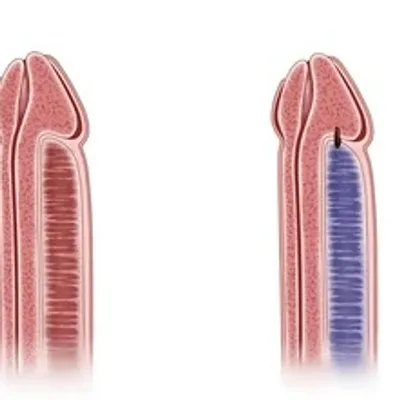
Priapism is defined as a prolonged erection lasting >4 hours, unrelated to sexual stimulation or satisfaction. Named after Priapus, the Greek god of fertility.
Incidence: 0.3–1.5 per 100,000 men/year in the general population, but >42% in males with sickle cell disease. Affects exclusively the corpora cavernosa — the corpus spongiosum and glans remain flaccid.
Types of priapism
Ischemic (low-flow) — 90%
Veno-occlusive. Penile compartment syndrome. EMERGENCY.
- Painful
- Fully rigid penis
- PO₂ < 30 mmHg
- PCO₂ > 60 mmHg
- pH < 7.25
- Necrosis after 24h
Non-ischemic (high-flow) — 10%
AV fistula after perineal/penile trauma. Less urgent.
- Painless
- Partially rigid
- Normal blood gas
- Frequent self-resolution
- Embolization if needed
- Good prognosis
Stuttering (recurrent) priapism
Recurrent self-limiting ischemic priapism episodes <4 hours, often nocturnal. Typical in sickle cell disease. Requires prophylaxis (nightly PDE5i, antiandrogens) to avoid full ischemic episode.
Causes and risk factors
Ischemic
- Sickle cell disease (up to 42% of males)
- Intracavernous injections (alprostadil, trimix)
- Antipsychotics (trazodone, chlorpromazine)
- Antidepressants (SSRIs)
- Cocaine, methamphetamine
- Leukemia, multiple myeloma
- Cavernous infiltrates
- Idiopathic (~33%)
Non-ischemic
- Perineal trauma (straddle injury)
- Penile trauma
- Post penile fracture
- Iatrogenic (post Doppler/biopsy)
- Congenital AV malformation (rare)
Symptoms and clinical picture
- Prolonged erection >4 hours without stimulation.
- Pain (ischemic — intense, non-ischemic — absent/mild).
- Full corporal rigidity (ischemic) vs partial (non-ischemic).
- Flaccid glans and corpus spongiosum — do not palpate rigidity at the glans.
- Voiding discomfort rarely — urethra usually free.
- History of trauma (non-ischemic) or injections/medications (ischemic).
Diagnosis
Detailed history
Erection duration, pain presence/intensity, prior episodes, perineal trauma, medications (psychiatric, antidepressants), ED injections, substances, sickle cell disease.
Physical examination
Corporal rigidity (full = ischemic, partial = non-ischemic), glans status, signs of perineal trauma.
Cavernous blood gas analysis
Needle puncture 19G/21G at 2 and 10 o'clock positions. Measure PO₂, PCO₂, pH. Ischemic: PO₂ < 30, PCO₂ > 60, pH < 7.25. Non-ischemic: normal blood gas.
Penile Doppler
Ischemic: minimal or absent flow in cavernous arteries. Non-ischemic: high turbulent flow at AV fistula (caverno-arterial).
Underlying cause work-up
CBC, hemoglobin electrophoresis (sickle cell), tox screen, hematological work-up if leukemia suspected.
Ischemic priapism treatment
Stepwise approach with increasing aggressiveness. Reassessment within 30–60 minutes at each stage.
Stage 1: Aspiration + irrigation
Local anesthesia (penile block). 19G needle puncture at 2 or 10 o'clock. Aspirate 50–100mL blood, irrigate with saline until return of bright red blood. Success ~30%.
Stage 2: Intracavernous phenylephrine
Phenylephrine 100–200μg every 5 minutes (dilute 1mg in 10mL saline). Max 1mg/h. Monitor heart rate and BP — hypertensive episodes, tachycardia, arrhythmia. Success 65% for episodes <12 hours.
Stage 3: Surgical shunt
Allows blood drainage from corpus cavernosum to spongiosum or venous network. Distal shunts: Winter (needle biopsy through glans), Ebbehoj (#11 blade through glans), Al-Ghorab (open tunical excision). T-shunt (Burnett). If failure: proximal shunts (Quackels — caverno-spongiosal, Grayhack — caverno-saphenous).
Stage 4: Early penile prosthesis
Ischemia >36 hours = corporal fibrosis. Prosthesis implantation within weeks is technically easier (vs. delayed after complete fibrosis) and restores length and function.
Non-ischemic priapism treatment
- Conservative observation — 60% of cases self-resolve with perineal compression, ice.
- Selective arterial embolization (1st-line if conservative fails) — autologous clot, gelfoam, or coils.
- Embolization success 75–90%, post-procedure ED 5–20%.
- Surgical arterial ligation only if embolization fails.
- Long-term follow-up — possible recurrence.
Prognosis and complications
- Ischemia <12 hours: ED in <10%.
- Ischemia 12–24 hours: ED in 30–50%.
- Ischemia >24 hours: ED in 90% — initiate prosthesis discussion.
- Cavernous fibrosis after 24h — irreversible.
- Penile curvature from fibrosis.
- Tissue necrosis, infection, gangrene in extreme prolonged priapism.
- Non-ischemic: excellent prognosis, ED <10%.
- Stuttering: gradual ED if developed without prophylaxis.
Frequently asked questions (FAQ)
What is priapism?
Priapism is a prolonged, often painful erection lasting >4 hours, unrelated to sexual stimulation. It is classified as ischemic (veno-occlusive, low-flow) — a urological emergency, and non-ischemic (arterial, high-flow) — less urgent.
How urgent is treatment?
Ischemic priapism is a urological emergency. Intervention within 4–6 hours preserves erectile function. Delay >24 hours leads to cavernous tissue necrosis and permanent ED in 90% of patients.
How does ischemic differ from non-ischemic?
Ischemic: painful, fully rigid penis, cavernous blood gas shows low O₂ (<30 mmHg) and high CO₂. Non-ischemic: typically after perineal/penile trauma, painless, partially rigid penis, normal blood gas, AV fistula on Doppler.
What is the diagnostic approach?
Detailed history (duration, pain, trauma, medications, sickle cell disease), physical examination, cavernous blood gas analysis (PO₂, PCO₂, pH), penile Doppler for ischemic/non-ischemic differentiation.
What is the treatment for ischemic priapism?
Stepwise approach: 1) aspiration + irrigation with saline, 2) intracavernous phenylephrine 100–200μg every 5 min (max 1mg/h), 3) surgical shunt (distal Winter/Ebbehoj/Al-Ghorab, T-shunt, proximal shunt) if failure, 4) early penile prosthesis for ischemia >36 hours.
What are the main causes?
Sickle cell disease (children/young adults — up to 42% of males), intracavernous injections for ED (alprostadil/trimix), antipsychotics (trazodone), psychotropic drugs (cocaine), hematologic malignancies (leukemia), perineal trauma (non-ischemic), idiopathic (~33%).
What is stuttering priapism?
Recurrent self-limited episodes of ischemic priapism lasting <4 hours, often nocturnal. Typical in sickle cell disease. Prophylaxis: nightly PDE5i (sildenafil), gonadotropin-releasing hormone analogues, antiandrogens.
What is the long-term prognosis?
Ischemia <12 hours: erectile function preserved in 90%. 12–24 hours: ED 30–50%. >24 hours: ED 90% — early prosthesis discussion. Non-ischemic: excellent prognosis, frequent self-resolution or treatment with selective embolization.
Related topics
Emergency? Call immediately
An erection lasting >4 hours requires immediate urological evaluation. Each hour of delay reduces the chance of normal erectile function.
Scientific literature
- EAU Guidelines on Sexual and Reproductive Health (2024) — Priapism — uroweb.org
- Bivalacqua TJ, Allen BK, Brock GB, et al. The Diagnosis and Management of Recurrent Ischemic Priapism, Priapism in Sickle Cell Patients, and Non-Ischemic Priapism: An AUA/SMSNA Guideline. J Urol 2022;208(1):43-52 — auanet.org
- Salonia A, Eardley I, Giuliano F, et al. European Association of Urology guidelines on priapism. Eur Urol 2014;65(2):480-9 — pubmed.ncbi.nlm.nih.gov
- Burnett AL, Sharlip ID. Standard operating procedures for priapism. J Sex Med 2013;10(1):180-94 — pubmed.ncbi.nlm.nih.gov
- Levey HR, Segal RL, Bivalacqua TJ. Management of priapism: an update for clinicians. Ther Adv Urol 2014;6(6):230-44 — pubmed.ncbi.nlm.nih.gov
Meet the doctor

Dr. Marinos Vasilas, Urologist – Andrologist
Dr. Marinos Vasilas offers specialized priapism management with a stepwise approach (aspiration, phenylephrine, surgical shunts) and expertise in penile prosthesis implantation for prolonged ischemic episodes.
View full profile


