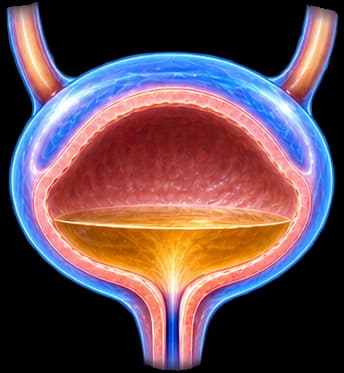
My Clinical Approach
Neurogenic bladder / NLUTD requires systematic, lifelong follow-up with a clear order of priorities: kidney safety first, continence second, quality of life third — exactly the priority order set out in current clinical guidance.
I follow the EAU Guidelines on Neuro-Urology 2026 and International Continence Society (ICS) terminology:
- Video-urodynamics as the essential tool — the only objective method to assess function/dysfunction of the lower urinary tract.
- Individualised risk assessment, not fixed numeric “thresholds” — the combination of neurological disease, dysfunction type and trend over time determines the risk.
- Clean intermittent catheterisation (CIC), individualised in frequency and technique, as the cornerstone of treatment when needed.
- Intravesical botulinum toxin A for refractory neurogenic detrusor overactivity, with dosing individualised by the treating physician.
- Sacral neuromodulation for selected patients with intact sacral roots.
- Bladder augmentation or urinary diversion when less invasive options have been exhausted.
- Close collaboration with neurology, rehabilitation medicine and a specialised nursing team — neurogenic bladder is never managed in isolation.
Neurogenic bladder & NLUTD: the terminology
“Neurogenic bladder” is the term patients usually use. The more precise clinical term is Neurogenic Lower Urinary Tract Dysfunction (NLUTD), because neurological damage does not only affect the bladder but also the urethra/sphincter, and it can involve the storage phase, the voiding phase, or both simultaneously.
Why the distinction matters: “Neurogenic bladder” suggests a single, uniform problem. In reality, NLUTD includes very different mechanisms (overactivity, low compliance, underactivity, dyssynergia) that require completely different treatment approaches. The terminology used throughout this page follows International Continence Society (ICS) standards.
How normal urination works
Normal urination depends on coordinated interplay between the bladder and sphincter, controlled by nervous centres at three levels: the brain (cortex, brainstem), the spinal cord (particularly the sacral segment S2-S4), and the peripheral pelvic nerves. During storage, the bladder relaxes while the sphincter stays closed. During voiding, the detrusor (bladder wall muscle) contracts while the sphincter relaxes — in the correct sequence and coordination. Damage anywhere in this network — from stroke to spinal cord injury or peripheral neuropathy — can disrupt this synchronisation.
Storage vs voiding: what can go wrong
NLUTD is classified into two broad categories of dysfunction, which can coexist in the same patient:
Storage dysfunction
The bladder cannot store urine safely — either because it contracts involuntarily (neurogenic overactivity) or because it does not stretch normally (low compliance). The result: urgency, frequency, incontinence — or silently high pressures with no symptoms.
Voiding dysfunction
The bladder does not empty effectively — either because the detrusor is weak/underactive, or because there is functional obstruction at the outlet (detrusor-sphincter dyssynergia). The result: weak flow, residual urine, retention, recurrent infections.
Many patients have a mixed picture — for instance, detrusor overactivity combined with sphincter dyssynergia — which is why urodynamic assessment is essential to pinpoint the exact mechanism before selecting treatment.
Neurogenic detrusor overactivity (NDO)
This is involuntary contraction of the bladder wall during the filling phase, documented on urodynamic testing. It often characterises lesions above the sacral spinal cord (e.g. spinal cord injury above T12, multiple sclerosis, stroke). Clinically it presents as urgency, frequency and urgency incontinence, but when accompanied by high filling pressures it can endanger the upper urinary tract, even if the patient does not perceive severe symptoms.
Low bladder compliance
Compliance describes how easily the bladder stretches during filling so that volume increases without a large rise in pressure. With low compliance, even moderate filling volumes cause disproportionately high pressure.
Important: Low compliance is one of the most “silent” and dangerous forms of NLUTD — it may cause no noticeable symptoms while transmitting high pressure to the kidneys. It is only detected by urodynamic testing, not ultrasound or symptom assessment.
Detrusor underactivity
This is a weak or absent detrusor contraction during voiding, resulting in incomplete bladder emptying and residual urine accumulation. It often characterises lesions below T12, sacral-level disease, diabetic neuropathy, and certain post-surgical pelvic injuries. Management is based primarily on regular, effective bladder emptying — usually by catheterisation — rather than medication, as drugs intended to “stimulate” the detrusor are no longer widely recommended given their limited effectiveness.
Detrusor-sphincter dyssynergia (DSD)
In normal urination, the sphincter relaxes at the exact moment the detrusor contracts. In DSD, this synchronisation is lost: the sphincter and detrusor contract simultaneously, creating functional obstruction at the bladder outlet. This results in high intravesical pressure during voiding, incomplete emptying, and increased risk to the upper urinary tract. It mainly characterises spinal cord lesions between the brainstem and the sacral segment, and is documented with urodynamic testing, ideally combined with pelvic floor electromyography.
Causes & level of neurological injury
The type of dysfunction largely depends on the location and extent of the neurological lesion — but the lesion location alone cannot reliably predict bladder behaviour in any individual patient, which is why individual urodynamic confirmation is always required.
Lesions above the pons (suprapontine)
Stroke, Parkinson’s disease, brain tumours, dementia. Usually cause detrusor overactivity without DSD, since detrusor-sphincter coordination at the spinal cord level is typically preserved.
Lesions between the pons & sacral cord (spinal)
Spinal cord injury, multiple sclerosis with spinal involvement. Often a combination of detrusor overactivity and detrusor-sphincter dyssynergia — the most dangerous combination for the upper urinary tract.
Sacral cord & peripheral nervous system lesions
Spina bifida, cauda equina syndrome, diabetic neuropathy, surgical/radiation pelvic nerve injury (radical hysterectomy, abdominoperineal resection). Usually cause detrusor underactivity or acontractility.
Specific neurological conditions
Spinal cord injury (SCI)
The classic cause of NLUTD. Bladder behaviour depends on the level and completeness of injury, but neither predicts the urodynamic outcome with certainty on its own — testing is always required. Patients with lesions at or above T6 are at risk of autonomic dysreflexia.
Multiple sclerosis (MS)
A very common cause of lower urinary tract symptoms, with the pattern often changing as the disease progresses — which is why reassessment matters whenever neurological status changes.
Parkinson’s disease & parkinsonian syndromes
Often urgency and nocturia early in the disease course. In atypical parkinsonian syndromes (e.g. multiple system atrophy) the dysfunction can be more complex.
Stroke
Acute incontinence or retention are common in the first weeks, with a tendency to improve over the following months in many patients — persistence of symptoms is associated with a poorer overall prognosis.
Diabetic neuropathy
Initially often overactivity, with a tendency toward detrusor underactivity and increased residual urine at more advanced stages.
Spina bifida
A congenital cause with a very high rate of disrupted bladder function — requiring systematic monitoring from childhood into adult life.
Symptoms
Storage symptoms
Frequency, nocturia, urgency, urgency incontinence.
Voiding symptoms
Weak or intermittent flow, sense of incomplete emptying, chronic retention, overflow incontinence.
Associated signs
Recurrent urinary infections, bladder stones, haematuria, flank/pelvic discomfort.
Autonomic dysreflexia (SCI at or above T6)
Sudden hypertension, severe headache, sweating — an emergency.
Central message: The severity of symptoms does not reliably predict the real upper urinary tract risk. Patients with minimal or no symptoms may have a dangerous urodynamic picture, while others with more bothersome symptoms may be at low risk. Risk is determined mainly by the type of neurological disease and objective findings, not by how intense the symptoms are.
Your first appointment
Full history
Urinary, neurological, bowel and sexual history, current medication, hand function (relevant if CIC is needed), expectations and quality of life.
3-day bladder diary
Recording of volumes, frequency, incontinence episodes and fluid intake — a key tool for interpreting every subsequent test.
Physical & neurological examination
S2-S5 sensation, bulbocavernosus reflex, anal sphincter tone, assessment of hand mobility.
Urinalysis & urine culture
Ruling out active infection before interpreting any other findings.
Renal function
Creatinine & glomerular filtration rate estimation, as a baseline for all future comparisons.
Renal & bladder ultrasound with post-void residual
First-line, non-invasive imaging.
Urodynamic testing (ideally video-urodynamics)
Determines the exact mechanism of dysfunction and the upper urinary tract risk.
Post-void residual (PVR): what it shows & what it doesn’t
Post-void residual (PVR) is a useful, easily measured indicator of incomplete emptying, but it does not reveal the pressure at which the bladder operates or the underlying mechanism (underactivity, dyssynergia, or simple functional variation). A normal PVR does not rule out a dangerous urodynamic picture, and an elevated PVR does not by itself determine treatment. It is always used together with other findings, never in isolation.
Renal function
Serum creatinine remains the most common monitoring test, but in patients with significantly reduced muscle mass (common in spinal cord injury or advanced neurological disease) it can underestimate the true impact on renal function. In these cases, the treating physician may consider alternative markers for estimating glomerular filtration. The takeaway: a “normal” creatinine does not always exclude renal impairment in this patient population.
Ultrasound: uses & limitations
Renal and bladder ultrasound is non-invasive, easily repeatable, and valuable for detecting hydronephrosis, measuring post-void residual, and checking bladder wall thickness.
What it cannot show: Ultrasound does not record the pressures inside the bladder. A bladder with low compliance or detrusor-sphincter dyssynergia can look entirely normal on imaging while operating at dangerously high pressure. This is why urodynamic testing remains essential in at-risk neurological patients, even when the ultrasound is completely normal.
Urodynamics & video-urodynamics
Urodynamic testing is the only objective method to assess function/dysfunction of the lower urinary tract. It records filling pressure, compliance, the presence of overactivity, detrusor-sphincter coordination, and flow during voiding. Video-urodynamics (urodynamics with simultaneous fluoroscopic imaging) is considered the optimal form of testing, as it combines functional data with morphological imaging (e.g. reflux into the upper urinary tract).
Important update: Fixed numeric pressure “thresholds” used to be applied as a general risk rule. More recent evidence shows that isolated measurements such as detrusor leak point pressure (DLPP) have very low sensitivity for reliably predicting upper urinary tract risk. The current approach relies on comprehensive interpretation of the full urodynamic profile by an experienced clinician, not a single number.
Why continence does not mean a safe bladder
The concept of a “safe bladder” is not about whether a patient leaks urine — it is about whether the bladder operates at pressures that do not harm the upper urinary tract. A patient may have perfect continence thanks to a very “tight” outlet mechanism (e.g. sphincter dyssynergia), while their bladder is quietly operating at pressures that, day after day, damage the kidneys. Conversely, a patient with frequent leaks may have a low-pressure bladder that poses no threat to the kidneys at all. This is why treatment targets in neurological patients are defined not by continence, but by the objective pressure-function picture.
Upper urinary tract risk
When the bladder chronically operates at high pressure (due to overactivity, low compliance or dyssynergia), that pressure is transmitted upward to the ureters and kidneys. Over time this can lead to hydronephrosis, vesicoureteral reflux, and progressive deterioration of renal function. Patients with spinal cord injury or spina bifida carry significantly higher risk of renal damage compared with those with more slowly progressive neurological conditions such as multiple sclerosis or Parkinson’s disease — one of the reasons follow-up intensity is individualised.
Treatment goals
Current clinical guidance sets out a clear order of priorities:
- Protection of the upper urinary tract (kidneys).
- Achievement or maintenance of urinary continence.
- Restoration, as far as possible, of lower urinary tract function.
- Improvement of quality of life.
“As effective as needed, as non-invasive as possible” — the guiding principle behind treatment selection at every stage.
Conservative & drug treatment
Behavioural therapy & rehabilitation
Bladder training, pelvic floor exercises, and in selected patients, electrical or magnetic stimulation, can help improve symptoms, especially as an adjunct to other treatments.
Antimuscarinics & beta-3 agonists
First-line drug treatment for neurogenic detrusor overactivity. Antimuscarinics have well-documented long-term efficacy. Mirabegron (a beta-3 agonist) offers similar symptomatic benefit with fewer side effects, although it does not appear to improve urodynamic parameters to the same degree — the choice is individualised.
Alpha-blockers
Can reduce outlet resistance and assist emptying in selected patients.
Combination therapy
Combining catheterisation with medication often achieves better results than either alone, particularly in patients with spinal cord injury or multiple sclerosis.
Clean Intermittent Catheterisation (CIC)
Clean intermittent catheterisation remains the cornerstone of treatment for patients who do not empty their bladder effectively. The patient (or carer) periodically inserts a catheter, empties the bladder, and removes it — nothing remains in place permanently.
CIC is not a treatment “failure.” On the contrary, it is the safest option for keeping bladder pressure low and protecting the kidneys, and for many patients it offers a better quality of life than an indwelling catheter. Frequency (commonly cited in the literature as around four to six times per day) and catheter type are individualised based on bladder capacity, fluid intake, and the urodynamic profile — there is no single “correct” number for everyone.
Accepting CIC can be psychologically challenging at first. Proper training from a specialised nursing team and choosing an appropriate catheter type (e.g. hydrophilic catheters, associated with a lower infection rate) significantly improve acceptance and long-term adherence.
Indwelling & suprapubic catheters
When CIC is not feasible (e.g. due to limited hand function or absence of a carer), an indwelling urethral catheter or a suprapubic catheter is considered. Both are associated with more long-term complications than CIC (infections, stones, strictures, tissue erosion) and are avoided whenever feasible.
Indwelling urethral catheter
Remains continuously in the urethra. Associated with increased risk of infection, urethral erosion, and, long term, possibly increased bladder cancer risk.
Suprapubic catheter
Placed directly into the bladder through the abdominal wall. Avoids urethral trauma, but carries a similar infection/stone risk to an indwelling urethral catheter.
In every case, bladder management options (CIC, indwelling catheter, assisted emptying techniques) should be discussed with the patient through shared decision-making — taking into account function, preferences and quality of life, not only the medical finding.
Intravesical botulinum toxin A
For patients with neurogenic detrusor overactivity that is not adequately controlled with medication, intravesical injection of botulinum toxin A into the bladder wall has documented efficacy across multiple clinical trials. Its effect is temporary (typically several months) and repeat injections are usually required. The exact dose and number of injection sites depend on the preparation used and are individualised by the treating urologist — there is no single universal protocol. Common side effects include urinary infections, urinary retention (which may require starting or increasing catheterisation), and, more rarely, generalised muscle weakness.
Neuromodulation & surgical treatment
Sacral neuromodulation
Stimulation of the sacral nerves that can improve bladder function in selected neurological patients with intact sacral roots. It is not suitable for every type of neurological injury — suitability is assessed individually.
Bladder augmentation (enterocystoplasty)
Surgical enlargement of the bladder using a segment of bowel, when all less invasive treatments fail to control low compliance or refractory overactivity. Effectively reduces pressure and stabilises renal function long term, but almost always requires lifelong catheterisation and regular follow-up for mechanical and metabolic complications.
Bladder outlet surgery (in men)
In selected cases of severe sphincter dyssynergia, techniques to reduce outlet resistance (e.g. sphincterotomy) may be considered to allow safer emptying, at the cost of possible incontinence — a decision made in a specialised setting after full patient counselling.
Urinary diversion
A last resort when no less invasive treatment can protect the upper urinary tract. Continent diversion with a self-catheterisable stoma is preferred where feasible.
The treatment pyramid
Treatment escalates step by step, always starting from the least invasive option that can achieve the safety goal:
- Behavioural measures, bladder training, assisted emptying techniques where indicated
- Drug treatment (antimuscarinics / beta-3 agonists, alpha-blockers)
- Clean intermittent catheterisation (CIC), alone or combined with medication
- Intravesical botulinum toxin A
- Sacral neuromodulation (selected patients)
- Bladder augmentation or urinary diversion (when all the above fail)
UTI vs asymptomatic bacteriuria
A positive urine culture alone does not mean infection. Asymptomatic bacteriuria is extremely common in people who catheterise and, according to current guidance, should not be sought out or treated — treating it leads to more antibiotic resistance without clinical benefit.
When it is truly a urinary tract infection: It requires a positive culture combined with symptoms — fever, new or worsening incontinence (or leakage around a catheter), increased spasticity, malaise, discomfort in the bladder/kidney area, or signs of autonomic dysreflexia. In neurological patients, many “classic” infection symptoms (burning, urgency) may be absent or replaced by these atypical signs.
Cloudy or foul-smelling urine alone does not confirm infection — it increases the likelihood but must always be combined with clinical picture and culture. For recurrent infections, the priority is optimising the underlying bladder dysfunction (e.g. reducing pressure, removing stones or foreign bodies) rather than long-term prophylactic antibiotics, which are generally avoided due to resistance risk.
Stones & bladder cancer risk
Bladder stones are more common in neurological patients, particularly those with an indwelling catheter, residual urine, or recurrent infections. Stone removal is an important part of managing recurrent infection.
There is also evidence of increased bladder cancer risk in people with long-term indwelling catheters. There is no universally agreed schedule for routine cystoscopy in every patient in this category, but prompt investigation with cystoscopy is essential for any new haematuria or other “red flag.”
Autonomic Dysreflexia
A medical emergency
Mainly affects patients with spinal cord injury at or above the T6 level. It is a sudden, exaggerated autonomic nervous system reaction to a stimulus — most often bladder overfilling or distension (e.g. a blocked catheter) or bowel distension.
It presents with a sudden rise in blood pressure, severe headache, blurred vision, sweating and heart rate changes. It requires immediate recognition and removal of the cause (e.g. an obstructed catheter) and urgent medical assessment — it can be life-threatening if left untreated.
Sexual function, bowel & pregnancy
Sexual function & fertility
Neurological disease can affect erectile function, ejaculation and fertility in men, and sexual response in women. Effective treatment options exist (medication, injectable therapies, mechanical aids, assisted reproduction techniques) — this should be discussed openly as part of comprehensive care.
Bowel function
Bladder and bowel innervation share common spinal centres, so neurogenic bowel dysfunction (constipation or faecal incontinence) frequently coexists and is managed alongside a dedicated bowel programme.
Pregnancy
Women with neurological disease and NLUTD can often carry a pregnancy safely, but require individualised, multidisciplinary monitoring (urologist, neurologist, obstetrician), particularly where there is risk of autonomic dysreflexia during labour.
Follow-up & risk stratification
There is no single follow-up schedule for every NLUTD patient. Frequency and intensity of monitoring depend on the type of neurological disease, the stability of symptoms, and the findings of the initial assessment.
- High-risk patients (e.g. spinal cord injury, spina bifida) usually need more regular imaging follow-up and urodynamic reassessment.
- Patients with more stable, slowly progressive conditions may need less frequent reassessment, always individualised.
- Any significant clinical change — new symptoms, deterioration, a change in neurological status — should prompt immediate reassessment, regardless of the scheduled appointment.
- Renal function, ultrasound and clinical status are reassessed regularly throughout follow-up.
Neurogenic bladder is a lifelong monitoring condition, even when the patient feels well. A stable, long-term relationship with a specialised team is the most reliable way to detect problems early, before they become symptomatic.
When to seek help immediately
Contact your urologist immediately if you notice:
- • New haematuria
- • Fever or chills
- • Sudden increase in incontinence or difficulty with catheterisation
- • Severe flank or pelvic discomfort
- • Signs of autonomic dysreflexia (sudden hypertension, headache, sweating)
- • A sudden change in renal function on a recent blood test
- • Any new, unexplained change in your neurological status affecting urination
Your Patient Journey
Initial assessment
History, neurological examination, bladder diary, urinalysis/culture, renal function, ultrasound.
Urodynamic testing
Determining the exact mechanism of dysfunction (overactivity, low compliance, underactivity, DSD) and assessing upper urinary tract risk.
Individualised treatment plan
Selecting treatment from the treatment pyramid, starting from the least invasive option that achieves the safety goal.
Training & support
If CIC is needed, training by a specialised nursing team. Collaboration with neurology/rehabilitation where needed.
Reassessment & adjustment
Regular follow-up according to risk level, with treatment adjusted whenever the clinical picture changes.
Lifelong follow-up
Neurogenic bladder is monitored throughout life, even when the patient feels well — kidney safety remains the top priority.
Frequently Asked Questions (FAQ)
What exactly is “neurogenic bladder”?
It’s the term patients commonly use to describe bladder dysfunction caused by damage to the nervous system that controls it. The precise clinical term is Neurogenic Lower Urinary Tract Dysfunction (NLUTD), because the damage affects the urethra/sphincter as well, not just the bladder, and can involve the storage phase, the voiding phase, or both.
What is the difference between “neurogenic bladder” and NLUTD?
“Neurogenic bladder” is the everyday, simplified term. NLUTD is broader and more precise, covering the full spectrum: detrusor overactivity, low compliance, underactivity, and detrusor-sphincter dyssynergia (DSD), plus their effects on the upper urinary tract. We use both terms on this page, but clinical decisions are always based on the specific NLUTD profile of each patient.
Which conditions cause neurogenic bladder / NLUTD?
Spinal cord injury, multiple sclerosis, Parkinson’s disease and other parkinsonian syndromes, stroke, spina bifida, diabetic neuropathy, surgical or radiation-related pelvic nerve injury, dementia, cauda equina syndrome, and other conditions of the central or peripheral nervous system.
If I have good continence, does that mean my bladder is safe?
Not necessarily. This is one of the most important points on this page: good continence does not equal a safe bladder. You may urinate normally with no leaks while your bladder is quietly operating at pressures that, over time, damage the kidneys. This is why objective assessment (urodynamics, imaging, renal function) is required regardless of how well you feel.
If I have few symptoms, does that mean I’m at low risk?
No. Symptoms and actual upper urinary tract risk often do not correlate. Patients with mild or minimal symptoms can have a dangerous urodynamic picture, while others with more bothersome symptoms may be at low risk. Risk depends mainly on the type of neurological disease and objective assessment findings, not on how troublesome the symptoms feel.
What is neurogenic detrusor overactivity (NDO)?
It is involuntary contractions of the bladder wall (detrusor) during the filling phase, documented on urodynamic testing, caused by neurological damage. It often characterises lesions above the sacral spinal cord (e.g. spinal cord injury above T12, multiple sclerosis, stroke). It causes urgency, frequency and urgency incontinence, and when accompanied by high pressures can endanger the kidneys.
What does “low bladder compliance” mean?
It is a reduced ability of the bladder to stretch during filling without a significant rise in internal pressure. With low compliance, even modest urine volumes can generate dangerously high pressure, threatening the kidneys — often without noticeable symptoms.
What is detrusor-sphincter dyssynergia (DSD)?
It is simultaneous contraction of the bladder (detrusor) and the urethral sphincter during voiding, instead of the sphincter relaxing. This creates functional obstruction, high intravesical pressures and residual urine, and it can only be documented with urodynamic testing (ideally with electromyography).
How is neurogenic bladder / NLUTD diagnosed?
Through a detailed history (urinary, neurological, bowel, sexual), a 3-day bladder diary, physical/neurological examination, urinalysis and urine culture, renal function testing, ultrasound with post-void residual, and urodynamic testing — ideally video-urodynamics. Additional tests (MRI, scintigraphy) are selected on an individual basis.
Is ultrasound enough to rule out a problem?
No, not on its own. Ultrasound is valuable for detecting hydronephrosis and measuring post-void residual, but it does not record the pressures inside the bladder. A bladder can look normal on ultrasound while functioning at dangerously high pressure — which is why urodynamic testing remains essential in at-risk neurological patients.
Why is urodynamic testing needed if I’ve already had an ultrasound and blood tests?
Because it is the only test that objectively records how the bladder actually functions — filling pressures, compliance, and detrusor-sphincter coordination. Ultrasound and blood tests show the consequences of a potentially problematic bladder, not the underlying mechanism.
Does the old “40 cmH₂O rule” still apply?
Older, simplified numeric “danger lines” no longer reflect current clinical practice. Risk assessment is individualised, combining the full urodynamic profile, the type of neurological disease, and the trend over time — not a single number. Do not rely on remembered thresholds from older literature; discuss your specific urodynamic result with your urologist.
Is the detrusor leak point pressure (DLPP) test still useful?
According to the most recent evidence, its sensitivity is too low to reliably estimate upper urinary tract risk or secondary bladder damage. It is no longer considered a reliable, stand-alone decision-making tool.
Will I need catheterisation forever?
Very often, yes — in the form of clean intermittent catheterisation (CIC), not an indwelling catheter. CIC is not a “failure” of treatment; it is, in fact, the safest method for keeping bladder pressure low and protecting the kidneys, and it often allows better quality of life compared with an indwelling catheter.
How many times a day is clean intermittent catheterisation (CIC) performed?
There is no single “correct” number for everyone. The literature commonly cites a range of four to six times per day as typical practice, but actual frequency is individualised based on bladder capacity, fluid intake, and the urodynamic profile — determined by the treating physician, not a general rule.
What is the difference between CIC, an indwelling urethral catheter, and a suprapubic catheter?
CIC is performed periodically by the patient or carer, leaving the bladder free between catheterisations. Indwelling urethral and suprapubic catheters remain continuously in the bladder and are associated with more long-term complications (infections, stones, strictures). For this reason, CIC is preferred wherever feasible.
What is intravesical botulinum toxin A and how long does it last?
It is an injection into the bladder wall that reduces involuntary detrusor overactivity when medication is not enough. The dose and number of injection sites are individualised by the treating urologist depending on the preparation and the patient’s profile. The effect is temporary (typically several months) and repeat injections are often needed. It may require starting or increasing catheterisation afterwards.
What is sacral neuromodulation?
It is a technique that stimulates the sacral nerves and can improve bladder function in selected neurological patients with intact sacral roots. It is not suitable for everyone — suitability is assessed individually.
What is bladder augmentation and when is it needed?
It is a surgical procedure that enlarges the bladder using a segment of bowel, reducing pressure and increasing capacity when all less invasive treatments have failed. It almost always requires lifelong catheterisation and regular follow-up for possible metabolic and mechanical complications.
What is the difference between a urinary tract infection and asymptomatic bacteriuria?
Asymptomatic bacteriuria (a positive culture without symptoms) is very common in people who catheterise and should not be treated with antibiotics — treating it increases antibiotic resistance without clinical benefit. A true urinary tract infection requires symptoms (fever, new or worsening incontinence, increased spasticity, discomfort, autonomic dysreflexia) together with a positive culture.
Does cloudy or foul-smelling urine always mean infection?
No, not on its own. Cloudy or foul-smelling urine increases the likelihood of infection but does not confirm it — it needs to be combined with other symptoms and a urine culture. In neurological patients, many “classic” infection symptoms may be absent or replaced by atypical signs such as increased spasticity or malaise.
What is autonomic dysreflexia and why is it an emergency?
It is a sudden, exaggerated reaction of the autonomic nervous system to a stimulus (most often bladder or bowel distension) in people with spinal cord injury at or above the T6 level. It presents with a sudden rise in blood pressure, severe headache, sweating and heart rate changes. Without prompt treatment of the cause (e.g. a blocked catheter, an overfull bladder), it can be dangerous — it requires immediate medical attention.
Are sexual function and fertility affected?
Yes, they can be affected depending on the underlying neurological condition, but there are effective treatment options (medication, injectable therapies, mechanical aids, assisted reproduction techniques). Discuss this openly with your urologist — it is part of comprehensive care, not a secondary issue.
Is bowel function affected too?
Often, yes, since bladder and bowel innervation share common spinal centres. Neurogenic bowel dysfunction (constipation or faecal incontinence) is frequently managed alongside a dedicated bowel programme.
Can a woman with a neurological condition and neurogenic bladder safely become pregnant?
In many cases, yes, but pregnancy in a woman with neurological disease requires individualised, multidisciplinary monitoring (urologist, neurologist, obstetrician), particularly for those at risk of autonomic dysreflexia during labour.
How often is follow-up needed?
There is no single schedule for everyone. Frequency depends on the type of neurological disease and risk level: high-risk patients (e.g. spinal cord injury, spina bifida) usually need more frequent imaging follow-up, while more stable, slowly progressive conditions may allow longer intervals. Any significant change in symptoms should prompt reassessment, regardless of the scheduled appointment.
Does long-term catheterisation increase bladder cancer risk?
There is evidence of increased risk in people with long-term indwelling catheters. There is no universally agreed schedule for routine cystoscopy in everyone, but prompt investigation of any “red flag” (e.g. haematuria) is essential.
What should I do if I notice deterioration or a new symptom?
Contact your urologist immediately. New haematuria, fever, increased incontinence, difficulty with catheterisation, signs of autonomic dysreflexia, or a sudden drop in renal function on a recent blood test are all reasons for immediate, not scheduled, assessment.
Related Topics
Neurogenic bladder: kidney safety first
Get in touch for a comprehensive assessment and individualised treatment plan: video-urodynamics, CIC training, intravesical botulinum toxin, neuromodulation — in collaboration with neurology and rehabilitation.
Scientific References
- EAU Guidelines on Neuro-Urology 2026 — uroweb.org
- Gajewski JB, Schurch B, Hamid R, et al. An International Continence Society (ICS) report on the terminology for adult neurogenic lower urinary tract dysfunction. Neurourol Urodyn. 2018;37(3):1152-1161
- Panicker JN, Fowler CJ, Kessler TM. Lower urinary tract dysfunction in the neurological patient: clinical assessment and management. Lancet Neurol. 2015;14(7):720-732
- Cruz F, Herschorn S, Aliotta P, et al. Efficacy and safety of onabotulinumtoxinA in patients with urinary incontinence due to neurogenic detrusor overactivity. Eur Urol. 2011;60(4):742-750 — pubmed.ncbi.nlm.nih.gov
- Wyndaele JJ. The management of neurogenic lower urinary tract dysfunction after spinal cord injury. Nat Rev Urol. 2016;13(12):705-714
- Krassioukov A, Warburton DE, Teasell R, Eng JJ. A systematic review of the management of autonomic dysreflexia after spinal cord injury. Arch Phys Med Rehabil. 2009;90(4):682-695
Meet the Doctor

Dr. Marinos Vasilas, Urologist & Andrologist
Multidisciplinary approach to neurogenic bladder / NLUTD following EAU 2026 guidance: individualised risk stratification, video-urodynamics, CIC training, and lifelong follow-up in collaboration with neurology and rehabilitation.
View Full Profile


