When it is useful
Mainly when:
- there is a high oncological risk
- bone symptoms are present
- there are biochemical or clinical signs of disease progression
It is not indicated indiscriminately in low-risk cases.
How the findings are interpreted
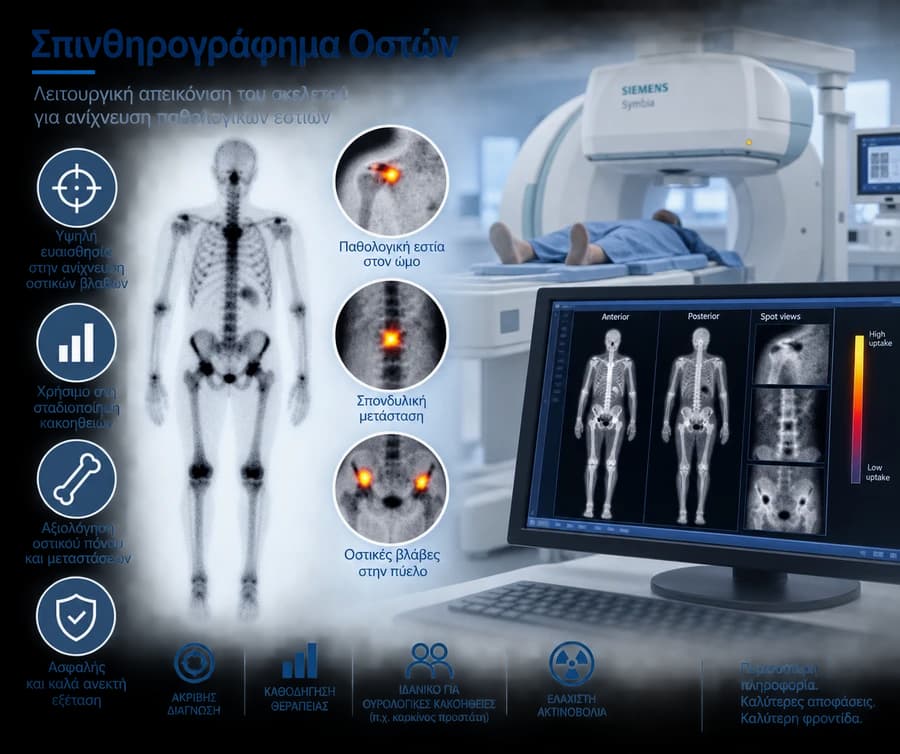
The test is sensitive but not fully specific.
Focal uptake often requires correlation with CT/MRI or newer techniques (such as PSMA PET/CT) for more precise staging.
No suspicious metastatic findings
No foci with a high suspicion of bone spread are identified.
Equivocal findings
Additional imaging is needed for a final classification.
Strong suspicion of metastatic disease
Clear, multiple compatible findings require an immediate oncological strategy.
Role in modern protocols
Although still useful, in some centers it is replaced or complemented by PSMA PET/CT due to higher diagnostic accuracy in selected scenarios.
Clinical impact
The result affects:
- staging
- the choice of systemic therapy
- the need for targeted management of bone complications


