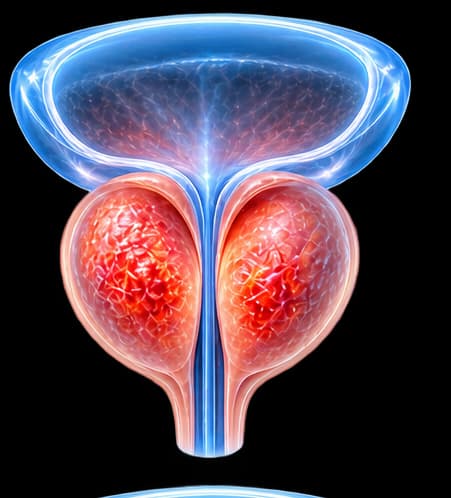
1. My Clinical Experience with Chronic Prostatitis
Chronic prostatitis is one of the most misunderstood and poorly managed urological conditions. In my practice in Rhodes, I frequently see patients who have spent months or years with chronic pelvic pain, taking repeated courses of antibiotics — without an infection ever being documented.
My Approach
According to the AUA 2025 Guideline:
- Distinguishing CBP from CP/CPPS as the first step — correct classification determines whether antibiotics are needed at all.
- Phenotypic evaluation using UPOINT for every CP/CPPS patient — identifying the six domains contributing to the clinical picture.
- Multimodal, individualised treatment targeting the patient’s specific mechanisms.
- Multidisciplinary collaboration with a specialised pelvic floor physiotherapist, a psychologist, and — where indicated — a pain specialist.
- Rational antibiotic use (antimicrobial stewardship): antibiotics only when infection is documented — never as a “trial”.
2. NIH Classification: From CBP to CP/CPPS
The internationally accepted National Institutes of Health (NIH/NIDDK) classification divides prostatitis into four categories:
| Category | Name | Characteristics | Frequency |
|---|---|---|---|
| I | Acute Bacterial Prostatitis (ABP) | Sudden onset, febrile, with documented infection | Rare |
| II | Chronic Bacterial Prostatitis (CBP) | Recurrent infections with the same pathogen | 5–10% |
| IIIa | CP/CPPS — inflammatory subtype | White blood cells in prostatic secretions, no bacteria | Common |
| IIIb | CP/CPPS — non-inflammatory subtype | No white blood cells or bacteria | Very common |
| IV | Asymptomatic inflammatory | Incidental finding on biopsy/semen analysis | Common — no treatment needed |
Why Correct Classification Matters So Much
The large majority (>90%) of men with chronic pelvic pain have CP/CPPS — not an infection. Empirical, repeated antibiotic use in these patients:
- Does not improve symptoms.
- Increases antimicrobial resistance at a population level.
- Delays real, effective treatment.
- Contributes to adverse effects (Clostridioides difficile, fluoroquinolone-related tendinopathy).
3. Epidemiology & Impact on Quality of Life
CP/CPPS affects 2–10% of adult men worldwide, accounting for around 8% of urology visits. The average age at diagnosis is 35–45 years, with a significant impact during the most productive years of life:
- Around 25% of patients report lost working hours.
- Around 50% reduce their social and recreational activity.
- Rates of depression and anxiety are 2–3 times higher than in the general population.
- Sexual dysfunction (erectile, ejaculatory) coexists in 40–60% of cases.
4. Pathophysiological Mechanisms
4.1 Chronic Bacterial Prostatitis (CBP)
CBP is characterised by pathogens trapped within the prostatic ducts, often as a biofilm that protects them from antibiotics and the immune response. Pathogens by frequency:
- Escherichia coli (75–80%)
- Klebsiella spp., Proteus spp., Enterobacter spp.
- Enterococcus faecalis
- In young, sexually active men: Chlamydia trachomatis, Mycoplasma genitalium, Ureaplasma urealyticum
Frequent recurrence with the same pathogen is the characteristic clinical feature.
4.2 CP/CPPS — A Multifactorial Syndrome
The cause of CP/CPPS is complex and multifactorial. The main mechanisms supported by current research:
Pelvic floor muscle dysfunction (PFM)
Spasm or chronic tightening of the pelvic floor muscles with trigger points. The AUA 2025 guideline recognises PFM as one of the dominant mechanisms.
Neurogenic sensitisation
Central and peripheral sensitisation — the nervous system “learns” pain and maintains it even without an active trigger.
Chronic neurogenic inflammation
Without a microbial cause.
Immune dysregulation
Elevated pro-inflammatory cytokines (IL-6, TNF-α) in prostatic secretions.
A prior subclinical infection
Acting as the initial trigger for chronic pain.
Psychosocial factors
Anxiety, depression, chronic stress — not as a “cause”, but as an amplifier of pain.
Urological factors
Coexistence with LUTS or an overactive bladder.
5. Symptoms & Clinical Picture
The hallmark symptom is chronic pain or discomfort lasting ≥3 months (within the last 6 months). The location can vary significantly:
5.1 Pain / Discomfort
- Perineum (between the scrotum and anus) — the most common location.
- Suprapubic / lower abdominal region.
- Penis (particularly the glans).
- Scrotum, testicles, spermatic cord.
- Lower back, sacrum, inner thigh.
5.2 Urinary Symptoms (LUTS)
- Dysuria (burning/pain during urination).
- Frequency, nocturia.
- Urgency.
- Weak or intermittent stream.
- Sensation of incomplete emptying.
5.3 Sexual Symptoms
- Pain during or after ejaculation — the most common sexual symptom and a strong clinical sign of PFM.
- Reduced libido.
- Erectile dysfunction.
- Haemospermia (rare).
5.4 Bowel-Related Symptoms
- Pain during defecation.
- Discomfort with prolonged sitting (a common PFM symptom).
- Sensation of fullness in the rectum.
5.5 Systemic Symptoms
- Fatigue, reduced energy.
- Sleep disturbance (a consequence of chronic pain and nocturia).
- Anxiety, depression — should be actively assessed.
6. Diagnostic Algorithm (AUA 2025)
According to the AUA 2025 Guideline Part I, CP/CPPS is a diagnosis of exclusion. Other causes of chronic pelvic pain must be systematically ruled out.
6.1 Detailed History
- Pain characteristics: location, quality, duration, aggravating/relieving factors.
- Urinary, sexual, and bowel symptoms — actively asked about, as patients often hesitate to volunteer them.
- Psychosocial burden: anxiety, depression, sleep quality.
- Previous treatments — particularly antibiotic courses (if they did not work, repeating them is not warranted).
- Comorbidities: irritable bowel syndrome (IBS), fibromyalgia, metabolic syndrome.
6.2 Physical Examination
- Inspection and palpation of the abdomen, groin, and scrotum.
- Digital Rectal Examination (DRE): assessment of the prostate, but mainly of the pelvic floor muscles for trigger points and overactivity (strong AUA 2025 recommendation).
- External palpation of the perineum and ischiocavernosus muscles.
6.3 Laboratory Work-Up
- Urinalysis and urine culture (to rule out infection).
- PCR/NAAT for Chlamydia and gonorrhoea in young, sexually active men.
- PSA: on a case-by-case basis, guided by age and risk factors for prostate cancer. Note: PSA can be falsely elevated in the inflammatory subtype of CP/CPPS.
6.4 Specialised Tests for CBP
When Chronic Bacterial Prostatitis is suspected (recurrent UTIs):
- The Meares-Stamey 4-glass test or the simplified 2-glass test: comparing bacterial load in urine before and after prostatic massage — the reference method for localising the infection.
- Culture of Expressed Prostatic Secretions (EPS).
- Semen culture as an alternative.
6.5 Uroflowmetry & Post-Void Residual (PVR)
When significant LUTS coexist, the EAU recommends uroflowmetry and PVR measurement before any treatment decision.
6.6 Imaging
Not routine. Transrectal ultrasound (TRUS) or mpMRI is indicated when there is suspicion of prostate abscess, prostate stones, seminal vesicle pathology, or inconsistent PSA findings.
7. NIH-CPSI: The International Symptom Score
The NIH Chronic Prostatitis Symptom Index (NIH-CPSI) is the internationally recognised, validated questionnaire for objectively quantifying CP/CPPS symptoms. It consists of 9 questions across three domains:
| Domain | Range | What It Assesses |
|---|---|---|
| Pain | 0–21 | Location, frequency, intensity |
| Urination | 0–10 | Frequency, sense of incomplete emptying |
| Quality of Life (QoL) | 0–12 | Impact on daily life |
| Total | 0–43 | Overall severity |
Severity Categories
- 0–14: Mild symptoms
- 15–29: Moderate symptoms
- 30–43: Severe symptoms
The NIH-CPSI is used not only for initial assessment, but mainly for monitoring response to treatment. A reduction of ≥6 points is considered a clinically significant improvement.
8. UPOINT: The Phenotypic Classification System
The UPOINT phenotyping system is one of the most important developments in managing CP/CPPS over the past 15 years. It was developed by Shoskes & Nickel and forms the basis of modern phenotype-directed treatment.
UPOINT identifies six clinical domains, each of which may be positive or negative in a given patient:
| Domain | Meaning | Frequency | Targeted Treatment |
|---|---|---|---|
| U — Urinary | LUTS, increased PVR | ~50–90% | Alpha-blockers, antimuscarinics |
| P — Psychosocial | Anxiety, depression, pain catastrophising | ~40–60% | Cognitive Behavioural Therapy (CBT), antidepressants |
| O — Organ Specific | Prostate tenderness, white cells in EPS | ~30–45% | Phytotherapy (quercetin, pollen extract), physiotherapy |
| I — Infection | Localised bacterial infection | ~5–15% | Targeted antibiotics |
| N — Neurologic/Systemic | Neuropathic pain, IBS, fibromyalgia | ~10–25% | Gabapentinoids, antidepressants |
| T — Tenderness (PFM) | Trigger points, muscle overactivity | ~50–60% | Pelvic floor physiotherapy (PFPT), trigger point injections |
Why UPOINT Works
Research has shown that when treatment is directed by UPOINT phenotype, around 84% of patients experience a clinically significant improvement (CPSI reduction ≥6 points) at 26 weeks. In comparison, a non-individualised approach has response rates of 30–40%.
9. Modern Treatment: A Phenotype-Directed Approach
9.1 Chronic Bacterial Prostatitis (CBP — NIH II)
CBP requires prolonged, targeted antibiotics guided by susceptibility testing, using agents with good prostatic penetration:
- Fluoroquinolones (ciprofloxacin, levofloxacin) — historically first-line, used with caution due to EMA/MHRA restrictions.
- Trimethoprim/sulfamethoxazole.
- Macrolides (azithromycin) or tetracyclines (doxycycline) — if intracellular pathogens are confirmed (Chlamydia, Mycoplasma).
- Fosfomycin for recurrent ESBL-producing strains (emerging evidence).
Treatment duration: 4–6 weeks, with a repeat urine culture after completion. In refractory cases, long-term, low-dose suppressive therapy may be considered.
9.2 CP/CPPS — Phenotype-Directed Multimodal Treatment
According to the AUA 2025 Guideline Part II:
Domain U — Urinary
- Alpha-blockers (tamsulosin, alfuzosin, silodosin): particularly effective in newly diagnosed patients (<1 year of symptoms) with coexisting LUTS. Conditional recommendation, Evidence Level B.
- Antimuscarinics / beta-3 agonists (mirabegron) for predominant storage symptoms.
Domain P — Psychosocial
- Cognitive Behavioural Therapy (CBT): strong AUA 2025 recommendation.
- Chronic pain management techniques (mindfulness, acceptance & commitment therapy).
- Antidepressants (SSRIs, SNRIs) when depression/anxiety coexist.
Domain O — Organ Specific
- Phytotherapy: quercetin 500 mg twice daily, pollen extract (cernilton) — with supporting evidence from RCTs.
- Saw palmetto: limited evidence.
Domain I — Infection
- Targeted antibiotics only if an infection is documented by culture or PCR.
- In newly diagnosed patients (<1 year of symptoms) without prior antibiotics, a single 4–6 week “empirical trial” may be considered. If there is no improvement, no further antibiotics are warranted.
Domain N — Neurologic / Systemic
- Gabapentinoids (gabapentin, pregabalin): for neuropathic pain.
- Low-dose tricyclic antidepressants (amitriptyline, nortriptyline).
- SNRIs (duloxetine) for chronic pain with or without depression.
- Referral to a pain specialist in refractory cases — AUA 2025 recommendation.
Domain T — Muscle Overactivity (Pelvic Floor)
- Pelvic Floor Physiotherapy (PFPT) from a specialised physiotherapist — the most effective intervention for patients with a positive “T” domain. Strong AUA 2025 recommendation.
- Myofascial release, trigger point release.
- Trigger point injections with local anaesthetic in patients who do not progress with PFPT.
- Relaxation exercises, stretching, biofeedback.
- High-frequency diathermy or extracorporeal shockwave therapy (ESWT) in selected patients.
9.3 Complementary Interventions
- Lifestyle changes: moderate aerobic exercise, reducing caffeine/alcohol/spicy food, avoiding prolonged sitting.
- Acupuncture: mentioned in EAU/AUA guidelines as a conditional recommendation in selected patients.
- Multidisciplinary approach in severe cases: urologist, pelvic floor physiotherapist, psychologist/psychiatrist, pain specialist.
9.4 What Is No Longer Recommended (AUA 2025)
- Repeated antibiotic courses without documented infection.
- Repeated prostatic massage as monotherapy.
- Indiscriminate opioid use for chronic pelvic pain.
- Urethral dilations without a specific anatomical indication.
10. Prognosis & Follow-Up
Prognosis
The course of CP/CPPS is fluctuating — with remissions and flares. With the correct phenotype-directed approach:
- 70–85% of patients experience a clinically significant improvement within 6 months.
- Complete cure is not always achievable — the goal is long-term management with a satisfactory quality of life.
- Patients with a shorter duration of symptoms (<1 year) and fewer positive UPOINT domains have a better prognosis.
Follow-Up Schedule
- Reassessment every 4–8 weeks during the initial treatment phase.
- NIH-CPSI at every visit for objective monitoring.
- UPOINT re-evaluation every 6 months — domains may change over time.
- Urine cultures only when CBP recurrence is suspected.
11. Differential Diagnosis: What Else Can Look Similar
Because CP/CPPS is a diagnosis of exclusion, other conditions that can cause similar symptoms must be systematically ruled out:
- Acute or recurrent bacterial prostatitis or Chronic Bacterial Prostatitis (CBP) — ruled out with cultures.
- Urethritis from sexually transmitted pathogens (Chlamydia, gonorrhoea) — ruled out with PCR/NAAT.
- Benign Prostatic Hyperplasia (BPH) with predominant urinary symptoms — distinguished with uroflowmetry and post-void residual.
- Bladder Pain Syndrome / Interstitial Cystitis — overlapping symptoms, particularly suprapubic pain with urgency.
- Prostate or bladder stones — ruled out with imaging when clinically suspected.
- Testicular/epididymal pathology (orchitis, epididymitis, scrotal ultrasound when there is local pain/swelling).
- Urethral stricture or other transurethral causes of chronic pain.
- Pudendal neuralgia — characteristically worse when sitting, better when standing.
- Musculoskeletal causes: sacroiliac joint dysfunction, abdominal wall/pelvic muscle groups.
- Colorectal/anal pathology: haemorrhoids, irritable bowel syndrome (IBS) — a common coexisting condition, not strictly a diagnosis of exclusion.
- Prostate cancer — does not typically cause pain at an early stage, but is checked when PSA is elevated or risk factors are present.
12. Ureaplasma & Mycoplasma: Detection Does Not Mean Causation
One of the most common points of confusion: many patients undergo PCR testing and receive a positive result for Ureaplasma urealyticum/parvum or Mycoplasma hominis. This does not automatically mean it is the cause of their symptoms.
- Ureaplasma spp. colonises the genitourinary tract of a significant proportion of sexually active adults without any symptoms — simple detection in an asymptomatic individual is not, on its own, an indication for treatment.
- Mycoplasma genitalium has a clearer pathogenic role in urethritis and is associated with increasing macrolide resistance — treatment, when clinically correlated, should be guided by susceptibility testing.
- International guidelines do not recommend a routine PCR “diagnostic hunt” for every possible microbe in patients with CP/CPPS without a clear clinical indication.
- Empirically giving macrolides/tetracyclines “just in case” for a positive finding unrelated to the symptom picture is not evidence-based and contributes to unnecessary antibiotic exposure.
13. Sexual Health & Fertility
Erectile Function
CP/CPPS is often associated with erectile dysfunction, mainly due to chronic pain, performance-related anxiety, and pelvic floor dysfunction — not because the prostate is being “destroyed”. Treating the underlying cause (pelvic floor physiotherapy, anxiety management) often improves erectile function as well.
Fertility
In couples having difficulty conceiving, chronic inflammation may in some cases affect semen parameters. A semen culture and semen analysis are recommended, with referral for andrological evaluation of infertility when there is a confirmed conception problem — not as a routine step for every asymptomatic couple.
14. The Patient Journey: From First Visit to Long-Term Management
- 1
Initial Assessment
Detailed history, physical examination (including pelvic floor assessment), urinalysis/urine culture, NIH-CPSI.
- 2
Ruling Out Infection & Other Causes
PCR/NAAT where indicated, PSA on a case-by-case basis, uroflowmetry/PVR if LUTS coexist.
- 3
Phenotypic Classification (UPOINT)
Identifying the domains affecting the specific patient.
- 4
Individualised Treatment Plan
A combination of targeted interventions per domain — not a “one drug for everyone” approach.
- 5
Follow-Up & Adjustment
NIH-CPSI reassessment every 4–8 weeks, adjusting the plan based on response.
- 6
Long-Term Management
The goal is stabilisation and improved quality of life, with realistic expectations for remissions/flares.
15. Frequently Asked Questions
Is chronic prostatitis always an infection?
No. Over 90% of cases fall under CP/CPPS and are not a bacterial infection. True Chronic Bacterial Prostatitis (CBP) accounts for only 5–10% of cases.
Do I need antibiotics?
Rarely. Only when an infection is documented by culture or PCR. In newly diagnosed patients, a single 4–6 week trial may be considered. If there is no improvement, further antibiotics are not helpful and can be harmful.
How long does treatment take?
CP/CPPS is a chronic syndrome that requires long-term management. Most patients experience significant improvement within 3–6 months of starting phenotype-directed therapy, but flares and remissions are expected.
What is pelvic floor physiotherapy?
It is a specialised form of physiotherapy delivered by trained therapists, using muscle relaxation techniques, myofascial release, trigger point release, stretching, and biofeedback. According to the AUA 2025 guideline, it is the most effective non-pharmacological intervention for patients with muscle overactivity (UPOINT domain T).
Can chronic prostatitis be linked to pain during ejaculation?
Yes. Pain during or after ejaculation is one of the most characteristic symptoms and a strong clinical indicator of pelvic floor muscle (PFM) dysfunction. It often responds very well to pelvic floor physiotherapy.
Is it contagious?
No. Neither CP/CPPS nor Chronic Bacterial Prostatitis are contagious diseases. In young men with a documented Chlamydia or Mycoplasma infection, partner testing and treatment is needed.
Is it cancer?
No. Chronic prostatitis and CP/CPPS are not cancer and do not increase the risk of prostate cancer. However, in patients with elevated PSA, proper evaluation is essential — inflammation can raise PSA and create a diagnostic challenge.
Does it affect fertility?
In some cases, chronic prostate inflammation may affect semen quality (motility, morphology, viability). Couples with difficulty conceiving are advised to have a semen analysis and a detailed andrological evaluation.
Can stress make symptoms worse?
Absolutely. Chronic stress, depression, and pain catastrophising are strong amplifiers. This is why the AUA 2025 guideline recommends actively assessing and addressing the psychosocial dimension as an integral part of treatment.
Which lifestyle changes help?
Moderate aerobic exercise (30 minutes, 3–5 times/week), reducing caffeine, alcohol, and spicy food, avoiding prolonged sitting or cycling during flares, relaxation techniques (yoga, mindfulness, breathing exercises), quality sleep, and warm sitz baths to relieve muscle overactivity.
Does CP/CPPS affect erectile function?
It can coexist with erectile dysfunction, mainly due to chronic pain, performance-related anxiety, and pelvic floor dysfunction — not because prostate tissue is permanently damaged. Treating the underlying cause often also improves erectile function.
Should I stop cycling or doing Kegel exercises?
Prolonged cycling can worsen symptoms during flares due to perineal pressure, and temporary avoidance or saddle adjustment is advisable. Generic Kegel exercises are not recommended in patients with an overactive (tight) pelvic floor — they may worsen symptoms; the appropriate intervention is determined by a specialised pelvic floor physiotherapist after assessment.
Related Topics
Book an Appointment in Rhodes
Persistent perineal pain, discomfort during urination or ejaculation, recurrent urinary tract infections? You don’t need another course of antibiotics — you need a proper phenotypic evaluation. In my practice in Rhodes, I apply the UPOINT approach and the most current AUA 2025 guideline for individualised, effective treatment.
References
- Lai HH, Pontari MA, Argoff CE, et al. Male Chronic Pelvic Pain: AUA Guideline: Part I — Evaluation and Management Approach. J Urol 2025;214(2):116–126. doi:10.1097/JU.0000000000004564. PubMed
- Lai HH, Pontari MA, Argoff CE, et al. Male Chronic Pelvic Pain: AUA Guideline: Part II — Treatment of CP/CPPS. J Urol 2025;214(2):127–137. doi:10.1097/JU.0000000000004565. PubMed
- AUA Guideline on Male Chronic Pelvic Pain (2025). American Urological Association — auanet.org
- EAU Guidelines on Chronic Pelvic Pain 2026. European Association of Urology — uroweb.org
- EAU Guidelines on Urological Infections 2025 (Section on Bacterial Prostatitis) — uroweb.org
- Shoskes DA, Nickel JC, et al. Clinical phenotyping of patients with chronic prostatitis/chronic pelvic pain syndrome and correlation with symptom severity. Urology 2009;73:538–542.
- Litwin MS, et al. The NIH Chronic Prostatitis Symptom Index (NIH-CPSI): development and validation. J Urol 1999;162:369–375. PubMed
- Anderson RU, et al. Painful myofascial trigger points and pain sites in men with CP/CPPS. J Urol 2009;182:2753–2758.
- Borgert B, Wallen E, Pham M. Prostatitis. JAMA 2025;334(11):1003. doi:10.1001/jama.2025.11499.
Medical Review

Dr. Marinos Vasilas, Urologist – Andrologist
Dr. Marinos Vasilas maintains private urology practices in Rhodes and Athens, with a particular interest in chronic pelvic pain syndrome and chronic prostatitis. He applies the UPOINT phenotyping system and the AUA 2025 Guideline on Male Chronic Pelvic Pain, working alongside specialised pelvic floor physiotherapists and psychologists when needed.
Full Profile


