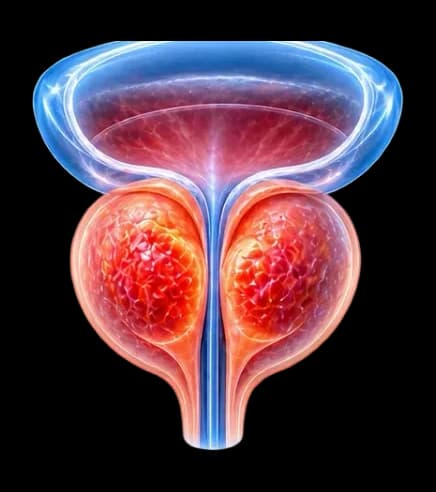
1. My Clinical Experience with Acute Prostatitis
In my urology practice in Rhodes, acute bacterial prostatitis is one of the most common genuine urological emergencies. Unlike chronic prostatitis/CP-CPPS — usually a non-bacterial, chronic pelvic pain syndrome — ABP develops abruptly, within hours, with a picture of systemic infection that can require immediate intervention.
My Approach
According to the EAU Guidelines on Urological Infections:
- Urine culture before starting antibiotics, whenever clinically feasible — without delaying treatment of a severe infection.
- Early recognition of possible sepsis — early intervention saves time and reduces complications.
- Rational antibiotic use (antimicrobial stewardship): individualised choice based on severity, history, and local resistance patterns — never a ready-made "prescription for everyone".
- Clear differentiation from chronic prostatitis/CPPS, simple urethritis, and benign prostatic hyperplasia, so that treatment is correctly targeted.
2. What Is Acute Bacterial Prostatitis — Routes of Infection
ABP is usually an acute bacterial infection of the prostate gland. There is no single route of infection — it can be related to:
Ascending infection from the urinary tract
Bacteria ascend from the urethra or bladder to the prostate — one of the most common routes.
Reflux of infected urine
Into the prostatic ducts.
Recent urological intervention / instrumentation
Catheterisation, cystoscopy, or prostate biopsy can be associated with bacterial transfer — the risk depends on the procedure and the patient.
Lower urinary tract obstruction
Conditions such as benign prostatic hyperplasia can promote urinary stasis and bacterial growth.
In selected cases, sexually transmitted pathogens
Depending on the patient’s age and risk profile.
None of these mechanisms is the sole cause — assessment is individualised, based on each patient’s history.
3. Which Bacteria Cause Acute Prostatitis
Gram-negative uropathogens are most often responsible, with a clear predominance of Escherichia coli. Other common pathogens:
- Klebsiella spp.
- Proteus mirabilis
- Other Enterobacterales
- Pseudomonas aeruginosa (particularly in healthcare-associated infections or after urological procedures)
- Enterococcus spp.
In selected patients — particularly younger, sexually active men, or when urethritis coexists — investigation for sexually transmitted pathogens may be needed.
4. E. coli & Acute Prostatitis
E. coli is one of the most common uropathogens that can cause acute bacterial prostatitis, as well as other forms of urinary tract infection. You can read more in our detailed guide on E. coli and urinary tract infections.
5. Symptoms of Acute Prostatitis
Symptoms usually appear suddenly, within hours. Not all of them need to be present at once:
5.1 Systemic Symptoms
- Fever.
- Chills.
- Significant malaise.
- Muscle and joint aches.
- Nausea or vomiting in more severe cases.
5.2 Pain
- Perineal pain — a characteristic location.
- Suprapubic pain.
- Lower back pain.
- Pain during ejaculation in some men.
5.3 Urinary Symptoms
- Dysuria (burning during urination).
- Frequency.
- Urgency.
- Difficulty starting urination.
- Weak stream.
- Sensation of incomplete emptying.
- Acute urinary retention in some patients.
- Haematuria in some cases.
6. When It Is an Emergency — Can It Cause Sepsis?
Yes. In severe bacterial infection, bacteraemia and urosepsis can occur. Sepsis is an emergency that requires immediate hospital evaluation — there are no home self-management instructions for possible sepsis.
If signs such as low blood pressure, confusion, rapid heart rate, significant weakness, shortness of breath, or reduced urine output are present, urgent evaluation for possible sepsis is needed.
Immediate Medical Evaluation Is Needed When There Is:
- High fever.
- Severe chills.
- Confusion.
- Feeling faint.
- Significant weakness.
- Inability to urinate.
- Severe, worsening pain.
- Vomiting or inability to keep fluids down.
- Possible low blood pressure.
- Worsening despite initial treatment.
7. Diagnostic Algorithm
7.1 Clinical Assessment & Digital Rectal Exam
On digital rectal examination (DRE), the prostate may be tender, swollen, or warm in some descriptions. The examination must always be performed gently — no specific palpation finding is required for the diagnosis.
IMPORTANT — No prostatic massage: in suspected acute bacterial prostatitis, vigorous prostatic massage should not be performed to obtain prostatic secretions. It can increase the risk of bacteraemia, systemic spread, and sepsis. Meares-Stamey-type testing is not a routine procedure during the acute phase.
7.2 Urinalysis
May show pyuria, bacteriuria, positive leukocyte esterase, nitrites (depending on the pathogen), or microscopic haematuria. Negative nitrites do not rule out infection — the clinical picture remains decisive.
7.3 Urine Culture
A urine culture before starting antibiotics, when clinically feasible and without delaying treatment of a severe infection, helps identify the pathogen and its susceptibility profile. In a severe, acute presentation, treatment should not necessarily wait for the culture result.
7.4 Blood Cultures
May be particularly indicated in high fever, chills, systemic illness, suspected sepsis, or hospitalised patients, according to current guidelines. They are not mandatory in every mild outpatient case.
7.5 Blood Tests
Depending on severity, a complete blood count, CRP, renal function, electrolytes, and, in suspected sepsis, lactate and other tests may be needed on a case-by-case basis. CRP is not a specific test for prostatitis — it reflects the general inflammatory process.
8. PSA & Acute Prostatitis
PSA can rise significantly during acute prostatic inflammation, sometimes to very high levels.
- PSA is not used to diagnose acute prostatitis.
- An elevated PSA during acute infection does not necessarily mean cancer.
- Routine PSA testing is not recommended simply to "confirm" prostatitis.
9. Acute Prostatitis & Prostate Cancer
Acute prostatitis is not the same as prostate cancer.
- Acute prostatitis can temporarily raise PSA without this meaning cancer.
- A persistent PSA abnormality after the infection has fully resolved may need reassessment.
- Acute inflammation by itself is not proven to increase the risk of prostate cancer.
10. Prostate Biopsy During Active Infection
An elective prostate biopsy should not be performed during active acute bacterial prostatitis.
- Biopsy during an active infection increases infectious risk.
- It is not the right time for elective oncological sampling.
Any future need for a biopsy (e.g., transrectal prostate biopsy or MRI fusion biopsy) is reassessed after the infection has been fully treated, and only if there is a genuine oncological indication.
11. Ultrasound, TRUS & CT/MRI
Imaging is not always required for simple, uncomplicated acute prostatitis. It may be needed when there is:
- Urinary retention.
- Suspected abscess.
- Persistent fever.
- Inadequate response to treatment.
- Diagnostic uncertainty.
Transrectal ultrasound (TRUS) can be used in selected cases, particularly when an abscess is suspected, and only when there is a genuine indication — not as a routine test in a very painful acute infection.
CT or MRI of the pelvis may be needed when there is suspicion of a complication, prostate abscess, persistent sepsis, diagnostic uncertainty, or spread of the infection — not as a routine first test.
12. Prostate Abscess
A prostate abscess is a possible but not common complication of acute bacterial prostatitis. It should be particularly suspected when:
- Fever persists despite appropriate antibiotics.
- There is an inadequate clinical response.
- The patient is immunosuppressed.
- The patient has diabetes.
- There is severe infection or persistent bacteraemia.
Management may require imaging, antibiotics, and, in selected cases, drainage. More information on our prostate abscess page.
13. Acute Urinary Retention
Inflammation and swelling of the prostate can cause acute inability to urinate. This is a urological emergency and requires immediate urological evaluation.
In a patient with acute prostatitis and retention, the method of bladder drainage (urethral or suprapubic catheter) should be chosen by the urologist, based on the clinical picture — there is no single “always correct” rule for every case.
14. How Acute Prostatitis Is Treated
Treatment is based on timely antimicrobial therapy, individualised according to:
- Urine culture / susceptibility testing, where available.
- Clinical severity.
- Local antimicrobial resistance patterns.
- Renal function.
- Allergies.
- Previous antibiotic exposure.
- Risk factors for resistant organisms.
In severe infection, hospitalisation, intravenous treatment, supportive fluid management, a sepsis protocol, urinary drainage, or investigation for an abscess may be required.
Important: the choice of antibiotic depends on whether the infection is community-acquired or healthcare-associated, previous cultures, resistance patterns, severity, the ability of the agent to reach appropriate tissue concentrations, renal function, and allergies. The antibiotic classes mentioned below are described at a guideline level — not as a personal prescription; the choice is always made by the treating physician.
Severe illness / hospitalisation (parenteral treatment)
Broad-spectrum cephalosporins or broad-spectrum penicillins are common first-line options in many centres, depending on local resistance patterns. An aminoglycoside may be added in severe cases or suspected resistant organisms.
Mild to moderate illness (oral treatment)
Trimethoprim/sulfamethoxazole or a fluoroquinolone may be used, individualised based on susceptibility testing, history, and local resistance patterns.
Transition to oral therapy (de-escalation)
After clinical improvement and stabilisation, treatment is adjusted based on the culture and susceptibility result.
How Long Does Antibiotic Treatment Last?
Treatment duration for acute bacterial prostatitis is usually longer than for simple cystitis, due to prostate tissue involvement. The exact duration depends on severity, response, pathogen, and any complications, and is determined by the treating physician — there is no single, universal duration for every patient.
Supportive Care
- Antipyretics/analgesics for fever, pain, and inflammation, depending on renal function, gastrointestinal risk, and comorbidities.
- Adequate fluid intake when there is no contraindication — not a treatment for the bacterial infection itself.
- In selected patients with significant voiding symptoms, alpha-blockers may be used as adjunctive treatment — not as treatment of the infection itself.
- Rest, avoiding strenuous physical activity during the acute phase.
15. Why Is Antibiotic Susceptibility Testing Important?
- It confirms the susceptibility or resistance of the pathogen to available antibiotics.
- It allows de-escalation or a change to a more targeted regimen.
- It is especially important because of rising antimicrobial resistance worldwide.
Where clinically relevant, strains such as ESBL-producing Enterobacterales or strains with fluoroquinolone resistance may be mentioned — this does not mean every patient will encounter a resistant pathogen.
Fluoroquinolones: regulatory agencies such as the EMA and MHRA have issued restrictions on their use due to serious adverse effects (tendinopathy, neuropathy, cardiovascular effects). Their use is individualised and decided by the treating physician.
16. When Hospitalisation & IV Treatment Are Needed
Possible reasons for hospitalisation:
- Systemic illness / possible sepsis.
- High fever with chills.
- Vomiting or inability to take oral medication.
- Significant comorbidities.
- Urinary retention.
- Low blood pressure.
- Immunosuppression.
- Risk of a resistant pathogen.
- Failure of previous treatment.
- Suspected abscess.
In severe or systemic infection, intravenous treatment is often required initially. The switch to oral therapy is based on clinical response, resolution of fever, culture results, and oral tolerance — without a fixed, universal drug/dose protocol.
17. What Happens If Prostatitis Does Not Improve
Fever and systemic symptoms are expected to improve with appropriate treatment; urinary/pelvic symptoms may take longer. If the expected clinical improvement does not occur, the following should be considered:
- Resistant pathogen.
- Inadequate coverage from the initial antibiotic.
- Poor treatment adherence.
- Urinary tract obstruction.
- Prostate abscess.
- Infected stone or other structural pathology.
- Incorrect initial diagnosis.
18. Acute Prostatitis vs Chronic Prostatitis / CPPS
A small proportion of patients may develop recurrent infection, Chronic Bacterial Prostatitis, or persistent pelvic symptoms after an ABP episode. However, not every acute prostatitis progresses to chronic prostatitis. More on our chronic prostatitis & CP/CPPS page.
| Feature | Acute Bacterial Prostatitis | Chronic Prostatitis / CPPS |
|---|---|---|
| Onset | Sudden | Chronic / recurrent |
| Fever | Common | Usually absent in CP/CPPS |
| Chills | May be present | Not characteristic |
| Bacterial infection | Central finding | Often absent in CP/CPPS |
| Urine culture | Often useful/positive | May be negative |
| Role of antibiotics | Primary treatment | Not routine without documented infection |
| Sepsis risk | Present | Not characteristic of CP/CPPS |
19. Differential Diagnosis: UTI & Pyelonephritis
Acute Prostatitis vs Simple UTI (Cystitis)
Cystitis is mainly confined to the bladder, while acute prostatitis involves prostate tissue and often causes systemic symptoms. In a man with a febrile UTI, possible prostatic involvement should always be assessed — without assuming every male UTI is prostatitis.
Acute Prostatitis vs Pyelonephritis
Prostatitis — more characteristic
- Pelvic/perineal pain
- LUTS
- Tender prostate on DRE
Pyelonephritis — more characteristic
- Flank pain
- Renal angle tenderness
- Fever/systemic infection
There is significant overlap, and clinical assessment by a urologist is essential. More on our pyelonephritis page.
20. STIs, Sexual Activity & Fertility
Sexually Transmitted Pathogens
In younger or higher-risk patients, or when urethritis coexists, sexual history and PCR/NAAT testing for Chlamydia, gonorrhoea, or Mycoplasma genitalium may be part of the evaluation. Not every case of acute prostatitis is treated as a sexually transmitted infection.
Sexual Activity
During the acute phase, pain, systemic symptoms, and possible painful ejaculation often practically limit sexual activity. If an STI is suspected, corresponding partner evaluation and notification are needed.
Fertility
Acute inflammation may temporarily affect reproductive tract parameters, but a single episode of acute prostatitis does not automatically mean permanent infertility. Persistent fertility concerns are assessed after full recovery.
21. Risk Factors
May include, without implying certainty of developing the condition:
| Factor | Relationship to risk |
|---|---|
| Lower urinary tract obstruction | Urinary stasis promotes bacterial growth |
| Benign prostatic hyperplasia (BPH) | Can cause residual urine and make urination harder during acute inflammation |
| Recent catheterisation | Mechanical transfer of bacteria |
| Recent urological procedure (biopsy, cystoscopy) | May be associated with healthcare-associated infection |
| Recurrent urinary infections | Chronically colonised flora |
| Diabetes / immunosuppression | Reduced bacterial clearance |
| Urinary tract anatomical abnormalities | Favourable conditions for infection |
A recent cystoscopy, catheterisation, or prostate biopsy can be associated with healthcare-associated infection, which affects the likely pathogen, resistance profile, and initial antibiotic choice — without assigning “blame” to the patient or the procedure. More on the relationship with benign prostatic hyperplasia.
22. The Patient Journey
- 1
Fever / chills + urinary symptoms
Recognising the first signs.
- 2
Immediate clinical assessment
History, physical examination, gentle DRE.
- 3
Urinalysis + urine culture ± blood tests/cultures
Depending on severity.
- 4
Assessment of severity / sepsis / retention
Decision for outpatient or hospital management.
- 5
Starting appropriate antimicrobial therapy
Without unwarranted delay.
- 6
Culture-guided adjustment
Targeted therapy once susceptibility results are available.
- 7
Clinical response?
Yes → complete treatment + follow-up. No → reassess for resistance, obstruction, abscess, or an alternative diagnosis.
23. Frequently Asked Questions
What is acute prostatitis?
It is a sudden bacterial infection of the prostate gland, usually appearing within hours with fever, chills, and severe urinary symptoms. Unlike chronic prostatitis/CP-CPPS, it is a genuine systemic infection that can require urgent treatment.
What are the first symptoms?
It often begins with sudden fever and chills, together with perineal or suprapubic pain, burning during urination, and frequency. Not all symptoms need to be present at once for the condition to be suspected.
Does it always cause fever?
Fever is very common but not absolutely universal in every case. Fever with chills in a man with urinary symptoms should always be assessed promptly, as it may indicate a systemic infection.
Which bacteria cause it?
Gram-negative uropathogens are most often responsible, with Escherichia coli being the leading cause. Other possible pathogens include Klebsiella, Proteus, Pseudomonas, and Enterococcus. In younger, sexually active men, a possible sexually transmitted cause should also be considered.
How is it diagnosed?
Diagnosis is based on history, clinical examination (with a gentle digital rectal exam), urinalysis, and urine culture. Depending on severity, blood tests, blood cultures, and, in selected cases, imaging may be needed.
Is a urine culture needed?
Yes — whenever clinically feasible, obtaining a urine culture before starting antibiotics helps identify the pathogen and its susceptibility profile. In severe infection, treatment starts immediately and is adjusted afterwards based on the result.
Is a PSA test needed?
PSA is not used to diagnose acute prostatitis, since inflammation temporarily raises it, sometimes to very high levels. If oncological evaluation is needed, it is carried out at the appropriate time after the infection has fully resolved.
Which antibiotics are used?
The choice is individualised by the treating physician based on severity, history, local resistance patterns, and culture results when available. There is no single "correct" antibiotic for everyone — self-medicating with antibiotics left over at home should be avoided.
How long does treatment last?
Antibiotic treatment for acute bacterial prostatitis is usually longer than for simple cystitis, because of prostate tissue involvement. The exact duration is determined by the treating physician based on the clinical course and the pathogen involved.
When is hospitalisation needed?
In cases of significant systemic illness, signs of possible sepsis, inability to take oral medication, significant comorbidities, or urinary retention. In these situations, intravenous treatment is often required initially.
Can it cause retention or sepsis?
Yes. Swelling of the inflamed prostate can cause acute inability to urinate, and in severe infection, bacteraemia and urosepsis can occur — a genuine emergency requiring immediate evaluation, not waiting at home.
What is the difference between acute and chronic prostatitis?
Acute prostatitis is sudden, febrile, and a true bacterial infection with a real risk of sepsis. Chronic prostatitis/CP-CPPS is a different, usually non-bacterial clinical syndrome, with chronic pelvic pain without fever or sepsis risk, where repeated antibiotic courses usually do not help.
Related Topics
Book an Appointment in Rhodes
Acute bacterial prostatitis needs timely urological evaluation, particularly when accompanied by fever, chills, difficulty urinating, or significant malaise.
References
- EAU Guidelines on Urological Infections. European Association of Urology — uroweb.org
- Bonkat G, Bartoletti R, Bruy\u00e8re F, et al. EAU Guidelines on Urological Infections. European Association of Urology.
- EMA — Fluoroquinolone and Quinolone Antibiotics: Referral. European Medicines Agency — ema.europa.eu
- MHRA — Fluoroquinolone Antibiotics: Drug Safety Update. Medicines and Healthcare products Regulatory Agency — gov.uk
- Singer M, Deutschman CS, Seymour CW, et al. The Third International Consensus Definitions for Sepsis and Septic Shock (Sepsis-3). JAMA 2016;315(8):801–810. PubMed
- Wagenlehner FME, Weidner W, Naber KG. Prostatitis and Chronic Pelvic Pain Syndrome. Dtsch Arztebl Int 2009;106(11):175–183.
The content of this page is for informational purposes only and does not replace a medical examination. The choice and duration of antibiotic treatment depend on clinical severity, cultures, pathogen resistance, and individual patient factors. Antibiotics should not be taken on your own initiative. Suspected sepsis or urinary retention require immediate medical evaluation.
Medical Review

Dr. Marinos Vasilas, Urologist – Andrologist
Dr. Marinos Vasilas maintains private urology practices in Rhodes and Athens, with expertise in the diagnosis and treatment of urinary tract infections and prostatitis. He applies the EAU Guidelines on Urological Infections and the principles of rational antibiotic use.
Full Profile


