My Clinical Approach
Addison's disease is rare, but when missed it kills. The diagnosis is too often delayed by months or years of vague symptoms — and the first presentation may be a fatal Addisonian crisis. Equally, in surgical patients with known PAI, inadequate perioperative steroid cover can cause preventable mortality.
In my urological practice three principles apply:
- Always ask about steroid use, fatigue, hyperpigmentation, weight loss, salt cravings — early diagnosis transforms outcomes.
- Coordinate with endocrinology — every patient must have a written sick day plan, an emergency steroid card, and family members trained to recognise crisis.
- Plan perioperative steroid cover meticulously for every PAI patient undergoing any procedure — even minor.
What Is Addison's Disease?
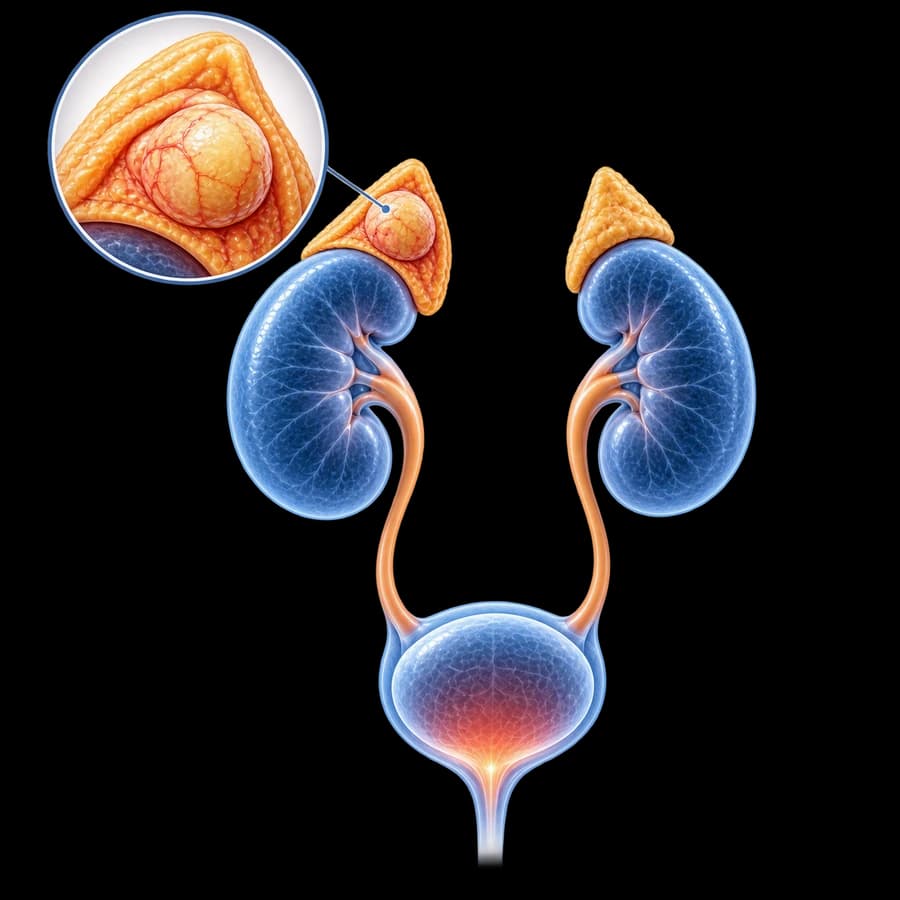
First described by Thomas Addison in 1855, the disease represents chronic primary adrenal insufficiency due to destruction of the adrenal cortex. Both glucocorticoids (cortisol) and mineralocorticoids (aldosterone) are deficient — distinguishing it from secondary adrenal insufficiency (pituitary or hypothalamic origin), where mineralocorticoid production is preserved.
Prevalence: ~100-140 per million in Western populations, ~4 new cases per million per year. Female:male ratio ~1.5:1. Typical age at diagnosis: 30-50 years.
Causes
Autoimmune adrenalitis (~80-90%)
This is the most common cause. It may occur alone or as part of polyglandular autoimmune syndrome (PAS) types 1, 2, or 4, and 21-hydroxylase antibodies are present in over 85% of cases.
Infectious
Tuberculous adrenalitis is still common in low-resource settings. Other infectious causes include HIV-related opportunistic infections and fungal infections such as histoplasmosis and cryptococcosis.
Haemorrhage
Bilateral adrenal haemorrhage can occur in severe sepsis (Waterhouse-Friderichsen syndrome), antiphospholipid syndrome, anticoagulation, or trauma.
Iatrogenic
This includes bilateral adrenalectomy, adrenal artery embolisation, and chronic glucocorticoid use, which can lead to secondary insufficiency.
Drugs
Certain drugs can cause adrenal insufficiency, including mitotane, ketoconazole, etomidate, abiraterone, and immune checkpoint inhibitors.
Genetic
Genetic causes include adrenoleukodystrophy (in men), congenital adrenal hyperplasia, and X-linked adrenal hypoplasia.
Symptoms
- Chronic fatigue, weakness, lethargy.
- Anorexia, weight loss, nausea, vomiting, abdominal pain.
- Salt craving, postural dizziness, hypotension.
- Hyperpigmentation — characteristic. Palmar creases, scars, gums, areolae, friction zones.
- Hyponatraemia, hyperkalemia, mild metabolic acidosis.
- Hypoglycaemia (especially in children, fasting, alcohol).
- Loss of axillary/pubic hair (women — DHEA deficiency).
- Decreased libido, depression, mood changes.
- Vitiligo, type 1 diabetes, autoimmune thyroid disease (autoimmune polyendocrinopathy).
Addisonian Crisis — Emergency
Symptoms
- Severe hypotension/shock, refractory to fluid resuscitation.
- Profound weakness, vomiting, abdominal pain mimicking acute abdomen.
- Hyponatraemia, hyperkalemia, hypoglycaemia.
- Fever (often without identified infection).
- Confusion, lethargy, coma.
Immediate Treatment
- Hydrocortisone 100 mg IV bolus immediately (do not wait for results).
- IV fluids: 1 L 0.9% saline in the first hour, then 4-6 L in the first 24 hours.
- Hydrocortisone 50 mg IV q6h for 24 hours, then taper.
- Treat the precipitant (infection, hypoglycaemia, trauma).
- ICU monitoring until stable.
Diagnostic Workup
- Morning serum cortisol (8 a.m.): < 5 μg/dL highly suggestive; > 18 μg/dL essentially excludes adrenal insufficiency.
- Plasma ACTH: high in primary (PAI), low/normal in secondary.
- Short Synacthen test (ACTH 1-24 250 μg IV/IM): cortisol < 18 μg/dL at 30-60 min confirms adrenal insufficiency.
- 21-hydroxylase antibodies: positive in autoimmune Addison.
- Plasma renin and aldosterone: high renin and low aldosterone in PAI.
- Adrenal CT/MRI: identifies infiltrative, haemorrhagic, infectious or neoplastic lesions.
- Screening for associated autoimmune diseases: TSH, anti-TPO, glucose, B12.
Hormone Replacement
Glucocorticoid
Hydrocortisone 15-25 mg per day is given in 2-3 divided doses, with the highest dose in the morning (for example, 10 mg on waking, 5 mg at noon, and 5 mg in the late afternoon). An alternative is prednisolone 3-5 mg once daily, or modified-release hydrocortisone (Plenadren) where available. Dexamethasone should be avoided for chronic replacement.
Mineralocorticoid
Fludrocortisone 50-200 μg/day is titrated to blood pressure, electrolytes, and plasma renin (targeting the upper-normal range), with absence of postural hypotension and oedema. Liberal salt intake is also recommended.
Adrenal androgens
DHEA 25-50 mg/day may help selected women who have persistently low quality of life despite optimal cortisol and fludrocortisone replacement.
Sick Day Rules and Patient Education
- Febrile illness (> 38°C) or significant infection: double oral hydrocortisone for as long as symptoms persist.
- Vomiting/diarrhoea or inability to take oral medication: IM hydrocortisone (100 mg) followed by emergency department transfer.
- Minor surgery/dental: 25-75 mg hydrocortisone IV before procedure.
- Major surgery/trauma: 100 mg IV induction + 50-100 mg q6-8h, then taper to baseline over 2-3 days.
- Pregnancy: increase hydrocortisone by 30-50% in the third trimester; 100 mg IV during labour.
- Always carry an emergency steroid card and an IM hydrocortisone emergency kit.
- Train family members and partners on the recognition and management of crisis.
Long-term Follow-up
Per the 2016 Endocrine Society guideline (Bornstein et al.) and the 2021 Lancet review (Husebye et al.):
- Endocrinology review every 6-12 months: clinical assessment, BP (supine and standing), weight, electrolytes, plasma renin.
- Bone density every 2-3 years (osteoporosis risk).
- Annual screening for associated autoimmune disease (TSH, glucose, B12).
- Lipid profile and cardiovascular risk assessment.
- Refresh patient education and emergency action plan annually.
Bottom line: Addison's disease is treatable. With proper replacement therapy, structured education, and vigilance for crisis, patients live a full life with normal life expectancy approaching that of the general population.
Frequently Asked Questions (FAQ)
What is Addison's disease?
Addison's disease (primary adrenal insufficiency, PAI) is the chronic deficiency of adrenocortical hormones — cortisol, aldosterone, and adrenal androgens — caused by direct destruction of the adrenal cortex. It is distinct from secondary adrenal insufficiency, which is caused by ACTH deficiency instead.
What causes it?
In Western countries, autoimmune adrenalitis causes about 80-90% of cases, often as part of a polyglandular autoimmune syndrome. Other causes include tuberculous adrenalitis, fungal infections, haemorrhage (Waterhouse-Friderichsen syndrome), bilateral adrenalectomy, metastatic infiltration, certain drugs (ketoconazole, etomidate, mitotane), congenital adrenal hyperplasia, and adrenoleukodystrophy.
What are the symptoms?
The onset is usually insidious, with chronic fatigue, weakness, weight loss, anorexia, nausea, abdominal pain, salt craving, and postural dizziness. Hyperpigmentation, especially of the palmar creases, scars, and gums, is characteristic of PAI. Severe hypotension, electrolyte disturbances (hyponatraemia, hyperkalemia), and hypoglycaemia can also occur.
What is an Addisonian crisis?
This is a life-threatening medical emergency, presenting with severe hypotension or shock, profound weakness, vomiting, abdominal pain, fever, electrolyte disturbances, hypoglycaemia, and altered mental status. It can be triggered by infection, surgery, trauma, gastroenteritis, or sudden cessation of corticosteroids, and it requires immediate IV hydrocortisone.
How is it diagnosed?
Per the 2016 Endocrine Society guideline (Bornstein et al.), a morning cortisol level below 5 μg/dL is highly suggestive, while a level above 18 μg/dL essentially excludes PAI. Diagnosis is confirmed by the short Synacthen (ACTH 1-24) test, where a cortisol level below 18 μg/dL at 30-60 minutes confirms adrenal insufficiency. Plasma ACTH is high in primary disease and low or normal in secondary disease, and 21-hydroxylase antibodies confirm an autoimmune cause.
What is the standard replacement therapy?
Treatment is hydrocortisone 15-25 mg per day in 2-3 divided doses, with the highest dose in the morning, or alternatively prednisolone 3-5 mg once daily. Fludrocortisone 50-200 μg/day is added for mineralocorticoid replacement, and DHEA 25-50 mg/day may help selected women with poor quality of life. Patients should always carry an emergency steroid card.
What are the sick day rules?
Patients should double the oral hydrocortisone dose during febrile illness or significant stress. If vomiting, diarrhoea, or inability to take oral medication occurs, they need IM hydrocortisone (100 mg) followed by emergency department transfer. For minor surgery, 25-75 mg hydrocortisone IV is given; for major surgery, 100 mg IV at induction followed by 50-100 mg every 6-8 hours.
Is normal life possible?
Yes. With proper replacement therapy, structured patient education, and adherence to sick day rules, patients with Addison's disease lead full lives. A slightly increased mortality and cardiovascular risk persist, however, which makes expert endocrinology follow-up essential.
Related Topics
Book Your Appointment in Rhodes
Suspected adrenal insufficiency or known Addison's disease requiring surgery deserves coordinated care. We work closely with endocrinology to deliver a complete plan — diagnosis, replacement therapy, perioperative steroid cover and patient education.
References
- Bornstein SR, et al. Diagnosis and Treatment of Primary Adrenal Insufficiency: An Endocrine Society Clinical Practice Guideline (2016) — academic.oup.com
- Husebye ES, Pearce SH, Krone NP, Kämpe O. Adrenal insufficiency — Lancet 2021 — pubmed.ncbi.nlm.nih.gov
- Allolio B. Extensive expertise in endocrinology. Adrenal crisis — Eur J Endocrinol 2015 — academic.oup.com
Medical Review

Dr. Marinos Vasilas, Urologist — Andrologist
Dr. Marinos Vasilas works closely with endocrinology in the perioperative care of patients with Addison's disease, ensuring safe steroid cover, structured patient education and prevention of adrenal crisis.
View full bio


